Turn a Spare Room Into a Guest-Ready Flex Space
The spare room shouldn't sit empty 340 nights a year waiting for guests. The trick is designing for the daily use first and the guests second.
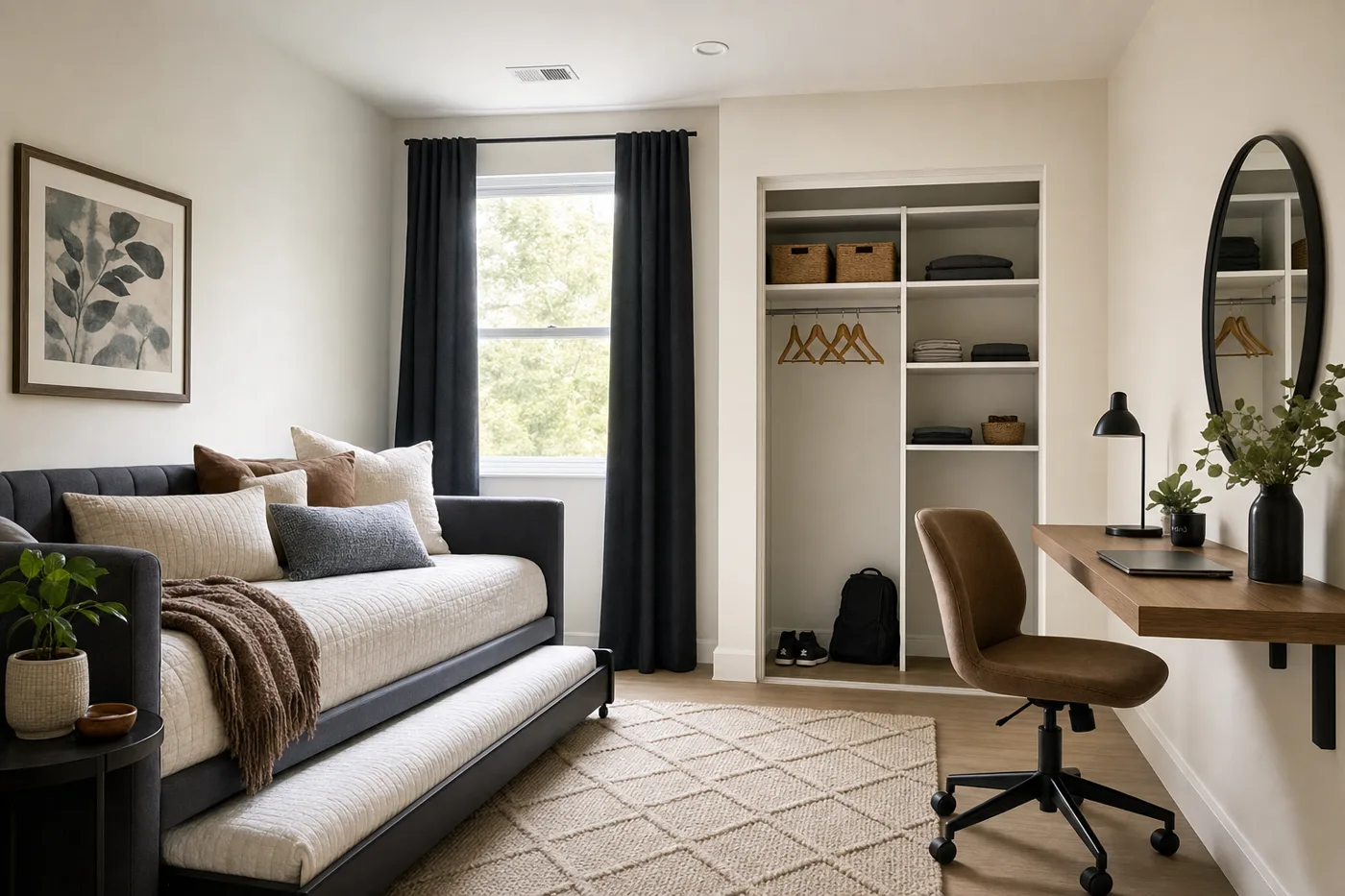
Every house has one: the room that’s officially the guest room, actually the treadmill room, and functionally a storage unit with a bed in it. A real flex space flips the priority — it works every single day as an office, gym, or hobby room, and converts to a genuinely comfortable guest room in ten minutes. That’s not a furniture problem; it’s a layout and storage problem, and a weekend solves it.
Choose the bed by the math of the footprint
A queen bed permanently claims about 35 square feet plus walk-around space — in a 10-by-11 room, that’s the whole room. A daybed with a trundle gives two twin sleeping spots on a 17-square-foot daily footprint and doubles as a sofa. A murphy bed costs more ($1,200–$2,500 for a kit plus a weekend of careful assembly) but returns the entire floor to daily use. Rule of thumb: rooms under 110 square feet want the wall bed; bigger rooms do fine with a daybed and get to skip the install.
Mock the layout in tape before buying
Blue-tape the footprint of the bed (open and closed, if it’s a murphy), the desk, and the walking paths on the floor. Keep 30 inches of clear path to the window and closet, and confirm the door swings free. Ten minutes of tape prevents the classic flex-room failure: furniture that fits the room but not the routine.
Install the bed hardware into studs
A murphy bed cabinet anchors to wall studs with lag screws per the kit’s spec — never to drywall anchors — and wants two people for the panel assembly. Going the daybed route instead? Anchor any tall headboard or bookcase beside it with anti-tip straps; a room used daily gets bumped daily.
Black out the window like a hotel
Guests sleep in unfamiliar rooms badly, and dawn through thin curtains finishes the job. Blackout cellular shades mounted inside the frame, or blackout curtains on a wraparound rod hung 6 inches above and 8 inches past the frame on each side, kill the light leak at the edges. It’s a 45-minute install and the single most-noticed upgrade any guest room can get.
Split the closet 70/30
Reset the closet with a shelving kit: 70% for the room’s daily function, 30% permanently reserved for guests — six empty hangers, two shelves, spare bedding in a labeled bin. A guest who can hang a jacket without asking feels like a guest instead of an intruder in your storage.
Stage the ten-minute conversion kit
One labeled bin holds the changeover: fitted sheets, a spare blanket, two pillows in protectors, a small fan, and a card with the Wi-Fi password. Add a bedside surface with a lamp and a charger within arm’s reach of the pillow. When guests text that they’re coming, the room converts in the time it takes to make the bed.
Murphy bed lift mechanisms store serious spring or piston tension. Follow the kit’s assembly order exactly, never remove the mattress with the bed folded up, and keep the locking mechanism engaged in daily mode — an unlatched wall bed is a genuine hazard in a room kids wander into.
Design the room for the 340 ordinary nights, and the 25 guest nights take care of themselves.
The test run
Before the first real guest, sleep in the room yourself one night. You’ll find the streetlight leak, the squeaky floorboard, and the missing phone charger in eight hours flat — and fixing them costs almost nothing. A flex room that passes the owner’s test is a guest room that never needs apologizing for.
Keep the momentum going
All articles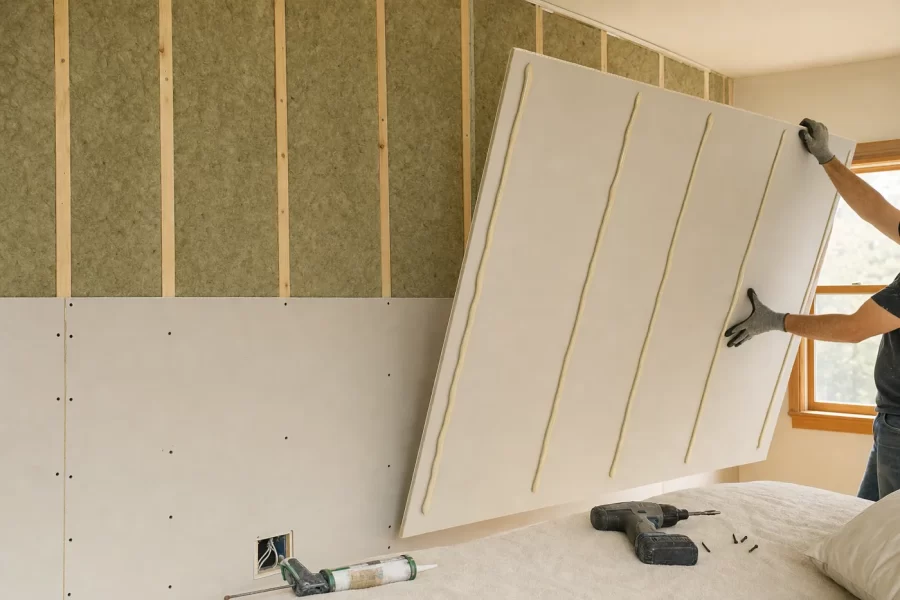
Soundproof a Bedroom Wall So It Actually Works
A step-by-step guide to soundproofing a bedroom wall with mass, damping, decoupling, and airtight sealing — and why foam panels alone fail.
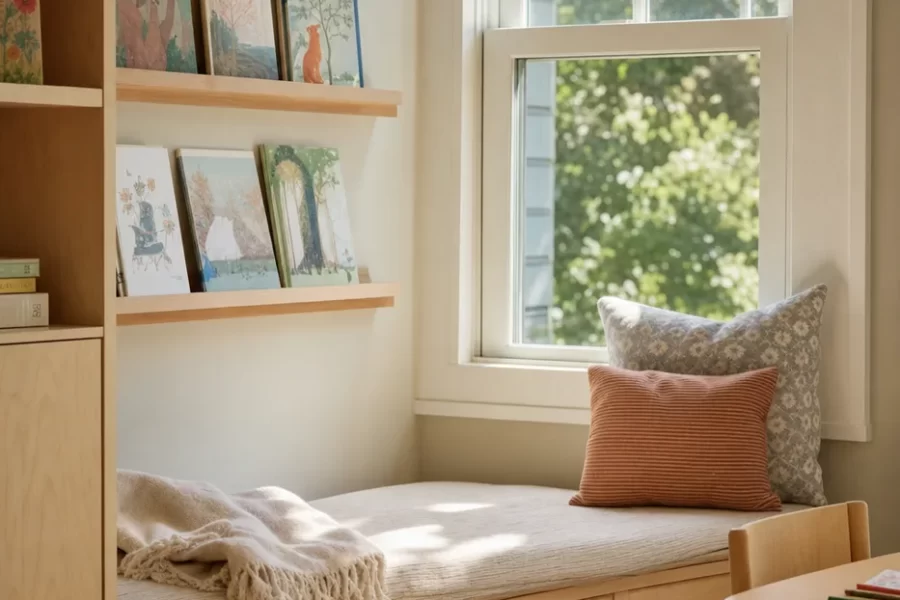
Build a Built-In Reading Nook Kids Never Outgrow
A step-by-step guide to building a kids' reading nook: a plywood bench box anchored to studs, a cushion top, book rails, and safe lighting.
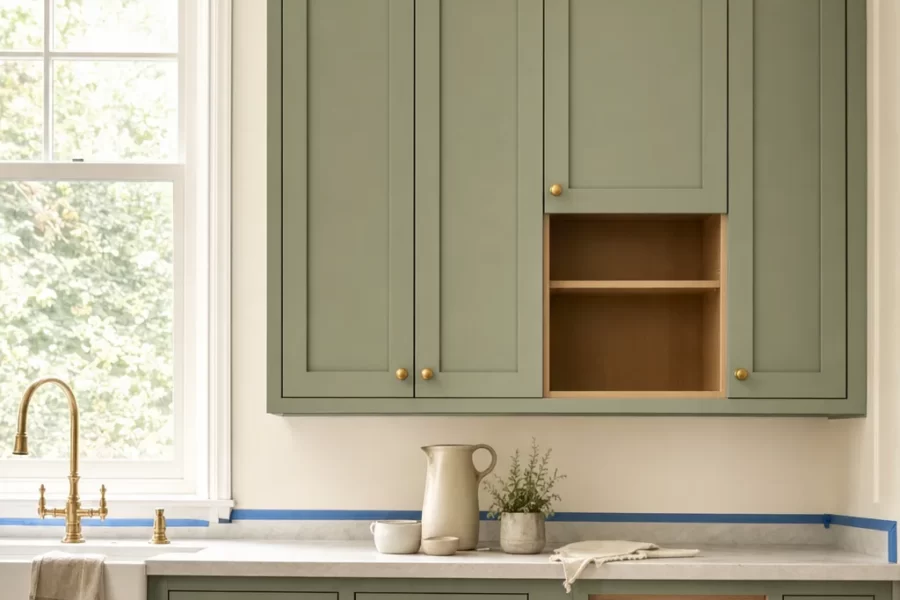
How to Paint Kitchen Cabinets Like a Pro
A step-by-step DIY guide to painting kitchen cabinets: degreasing, sanding, priming, and roller technique for a factory-smooth finish on a weekend budget.