Soundproof a Bedroom Wall So It Actually Works
Foam panels don't stop sound; they just make your side of the wall less echoey. Real quiet takes mass, damping, and sealing every last air gap.
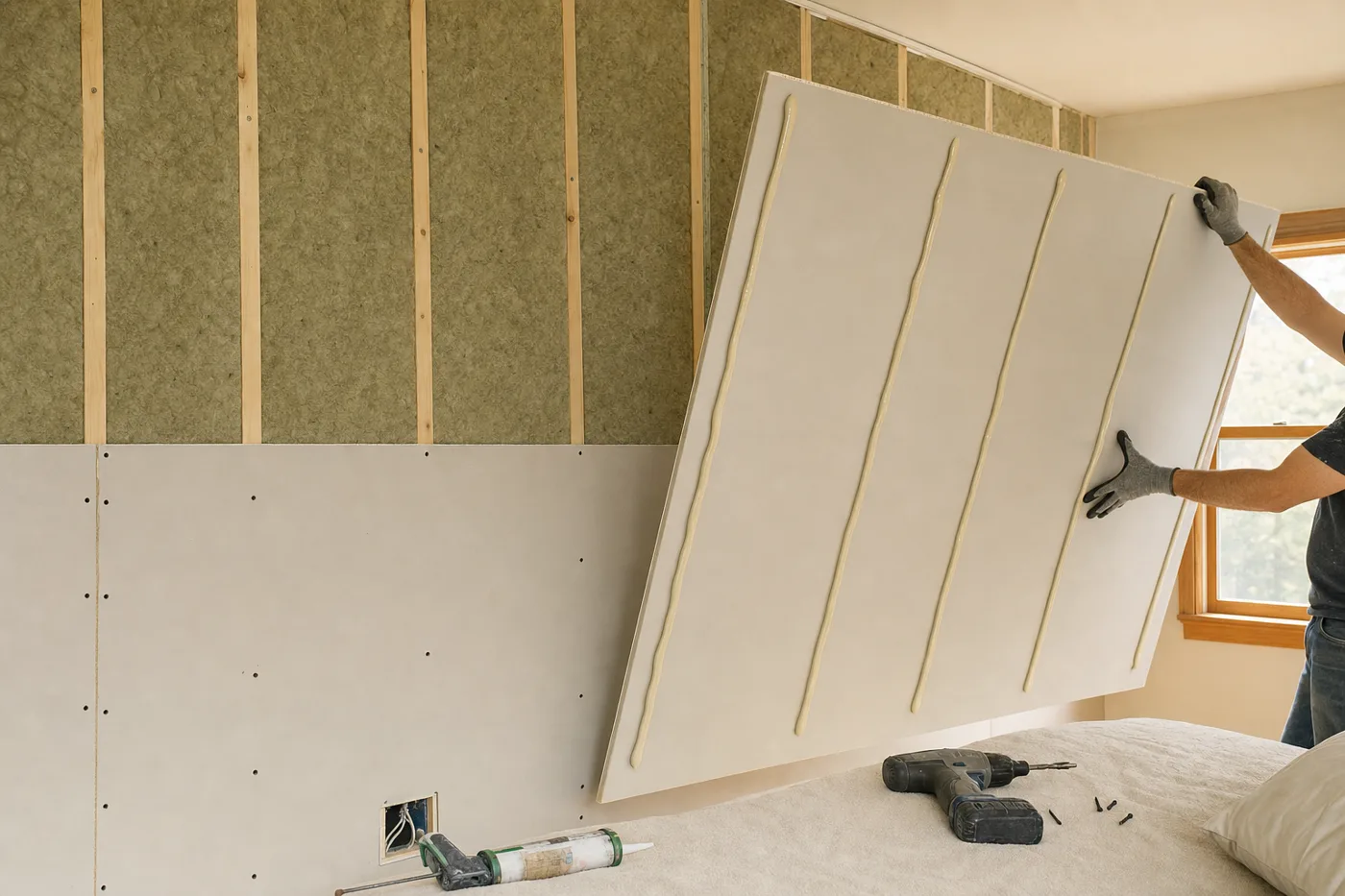
Soundproofing is the most mis-sold project in home improvement. Egg-crate foam, thin adhesive tiles, and heavy curtains treat echo inside a room but do almost nothing to stop sound passing through a wall. Blocking sound obeys physics with four levers — mass, damping, decoupling, and airtightness — and a bedroom wall that uses three of them well will drop a neighbor’s TV from intelligible words to a faint murmur.
Know your enemy: airborne vs. structure-borne
Voices, TV, and music are airborne sound; footsteps and bass thumps travel through the framing itself. This playbook targets airborne noise through a shared wall, where a standard single-drywall assembly rates around STC 33 — normal speech clearly audible. The upgrades below push a wall into the low 50s, where loud speech becomes a non-event. Structure-borne bass needs decoupling and is honest work, not a weekend afterthought.
Seal before you build — air is the highway
Sound rides air through any gap: outlet boxes, the crack under the baseboard, gaps at the ceiling line. Pull outlet covers and wrap the boxes in putty pads, then run acoustic caulk along the wall’s entire perimeter — floor, ceiling, corners. A 1% open area in a wall can leak a shocking share of its sound. This step costs $40 and beats any panel product sold on late-night ads.
Add mass: a second layer of 5/8 drywall
Screw a full second layer of 5/8-inch drywall over the existing wall, seams offset from the originals, screws into studs. Doubling mass alone gains roughly 5 STC points — clearly audible improvement. Tape, mud, and finish as usual; the wall grows five-eighths of an inch, so plan on extending outlet boxes with listed extension rings.
Damp between the layers
Before that second sheet goes up, trowel or gun viscoelastic damping compound across its back per the tube’s coverage pattern. Sandwiched between two rigid layers, it converts vibration into trace heat and tames the mid-frequencies where voices live — the single best dollars-per-decibel upgrade in the whole assembly.
Decouple if you’re opening the wall
Gut renovation or new framing? Mount the drywall on resilient channel or isolation clips so it floats free of the studs, and fill the bays with ordinary fluffy insulation. Decoupling is the biggest single lever there is — but one screw driven through the channel into a stud short-circuits the whole system, so mark your framing and check every fastener.
Fix the door, or the wall was for nothing
A hollow-core door with a half-inch air gap under it will happily bypass your beautiful wall. Swap to a solid-core slab, add compression weatherstripping on all three sides, and mount an automatic door sweep. Flanking paths — ducts, shared joists, back-to-back outlets — set the ceiling on what any wall can achieve.
That second layer of drywall weighs about 70 pounds per sheet. Lift with a helper or rent a drywall lift for ceilings, and screw into studs — not just the old drywall — or the new mass slowly works loose.
A wall is only as quiet as its biggest air gap — and the biggest air gap is usually under the door.
What to expect
Done right — sealed, doubled, damped, door fixed — conversations next door fade to a murmur you have to strain for, and most nights you won’t notice at all. Give the acoustic caulk a week to fully cure before judging, then enjoy the strangest luxury a house can offer: silence you built yourself.
Keep the momentum going
All articles
Build a Built-In Reading Nook Kids Never Outgrow
A step-by-step guide to building a kids' reading nook: a plywood bench box anchored to studs, a cushion top, book rails, and safe lighting.
Turn a Spare Room Into a Guest-Ready Flex Space
A step-by-step guide to converting a spare room into a flex space: daybed or murphy bed choice, blackout window treatment, split storage, and daily-use layout.
How to Paint Kitchen Cabinets Like a Pro
A step-by-step DIY guide to painting kitchen cabinets: degreasing, sanding, priming, and roller technique for a factory-smooth finish on a weekend budget.