Build a Built-In Reading Nook Kids Never Outgrow
A reading nook turns a room's dead corner into the most-used four square feet in the house. One sheet of plywood and a weekend does it.
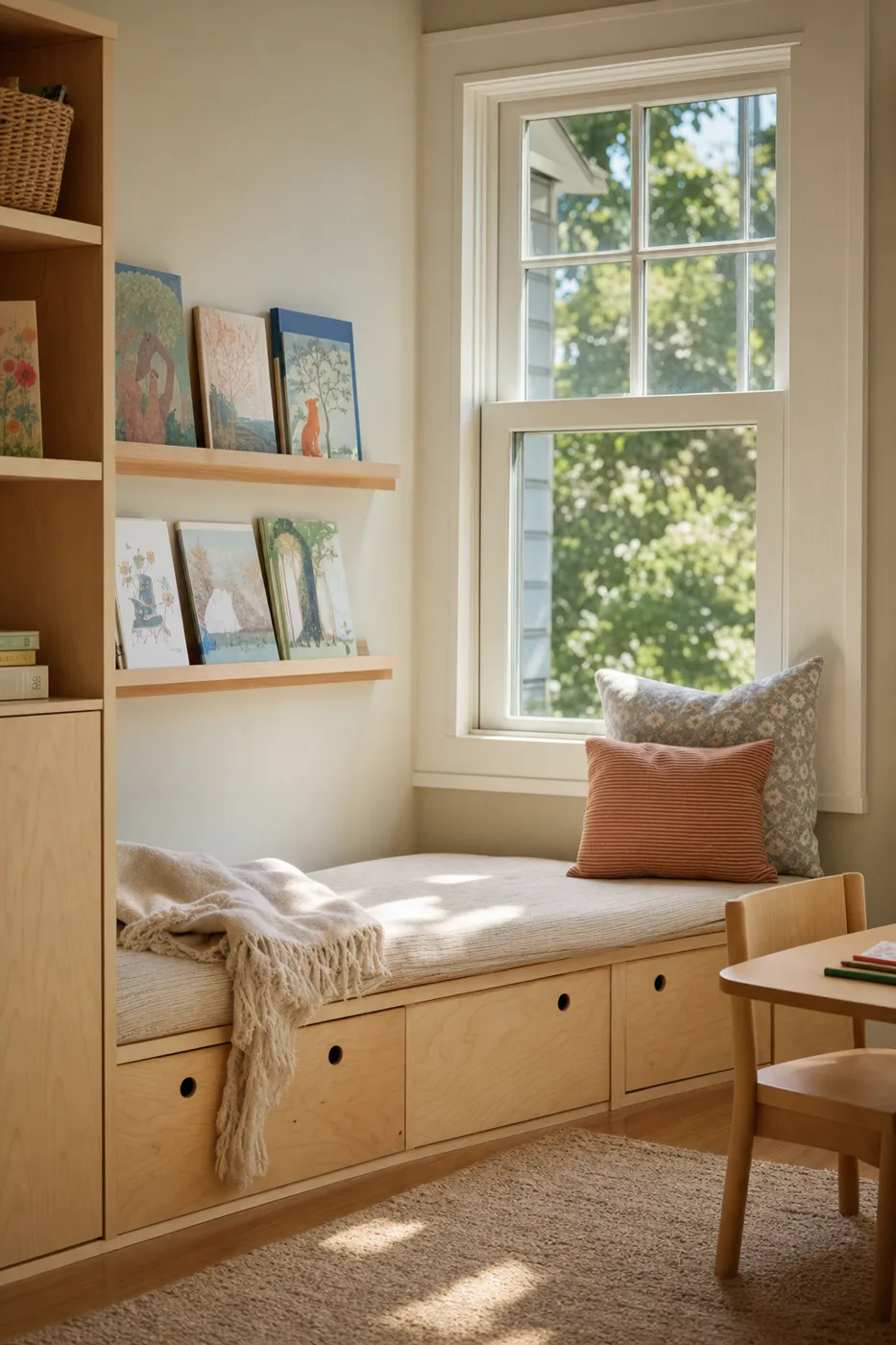
Kids don’t need more floor space — they need a spot that is unmistakably theirs. A built-in reading nook delivers that with one sheet of plywood: a bench at the right height, a cushion, books displayed cover-out at eye level, and a little pool of light. Built into a corner or under a window and anchored to the studs, it feels like architecture instead of furniture, and it survives the transition from picture books to phones without a single modification.
Size it for a kid, not a catalog
The magic dimensions: seat height 12 to 14 inches for the elementary years, depth 16 to 20 inches, length at least 36 inches so a parent fits too — the read-aloud years are the whole point. Under a window works if the sill is high enough; a corner between wall and closet works everywhere. Skip anything deeper than 20 inches: it stops being a seat and becomes a shelf for laundry.
Build the bench box
Cut the plywood into a front panel, two ends, a top, and internal dividers every 16 inches so the top never sags under a jumping child. Assemble with glue and countersunk screws into a simple torsion box. Cut the top as a separate lid or leave the front open as cubbies — open cubbies get used; hinged lids pinch fingers unless you add soft-close lid supports rated for the lid’s weight.
Anchor it like a climbing wall
Screw a 2×4 ledger into the wall studs with 3-inch screws, level, at the height of the bench’s underside, and fasten the bench to the ledger and through the back into every stud it crosses. A built-in that a 60-pound kid will stand on, jump from, and treat as a pirate ship must be immovable. This is also what separates it in safety terms from freestanding furniture — nothing anchored can tip.
Trim it into the room
Face the plywood edges with screen mold or 1×2, caulk the wall seams, fill the brad holes, and paint. Matching the room’s baseboard along the bench base is the five-dollar detail that makes the whole thing read as original to the house.
Rails of books, at their eye level
Mount two or three picture ledges above the bench — lowest one about 18 inches over the cushion so books can’t be headbumped, each ledge screwed into studs or 50-pound-rated anchors. Face the covers out; a kid picks a book by its cover art, and a cover-out rail gets triple the traffic of any spine-out shelf.
Cushion and light
Cut 3-inch high-density foam to the seat, wrap it in batting, and cover it — a no-sew wrap stapled to a thin plywood base works fine and swaps out when tastes change. For light, a hardwired or plug-in wall sconce with the cord in a channel beats any lamp; kids and floor lamps are a countdown, not a combination.
Everything within a child’s reach must be anchored, cordless, and pinch-free: no free cords longer than 12 inches, no unsecured shelving above the bench, and lid stays on any hinged top. If the nook sits under a window, keep blind cords cut short and cleated — they are a documented strangulation hazard.
Kids read where the spot is theirs. Build the spot, and the books take care of themselves.
Growing with them
At eight, the picture ledges refill with chapter books. At twelve, a clip-on light and a phone shelf appear. The bench itself never changes — that’s the quiet argument for building it out of 3/4 plywood and screws instead of buying something with a weight limit. Repaint once a decade and it hands down to the next kid intact.
Keep the momentum going
All articles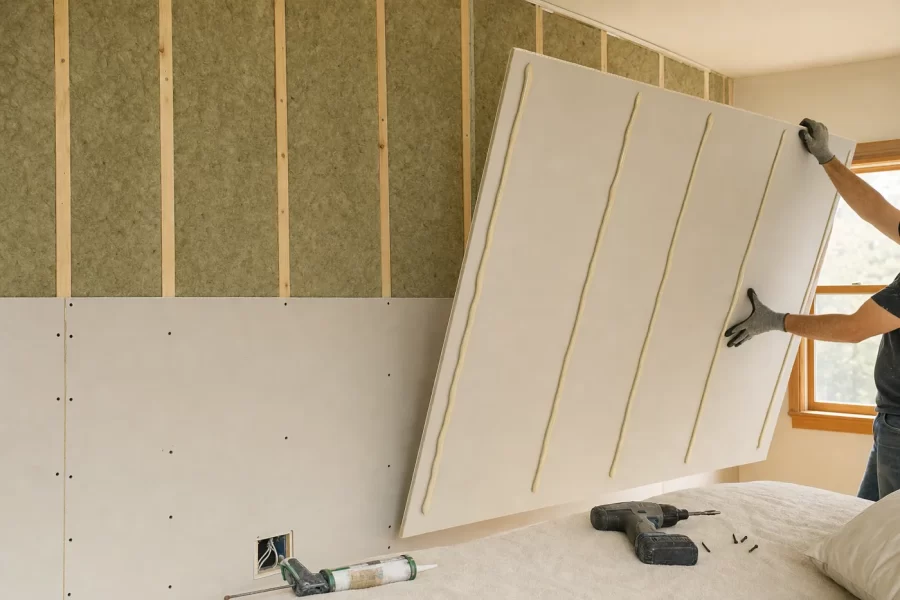
Soundproof a Bedroom Wall So It Actually Works
A step-by-step guide to soundproofing a bedroom wall with mass, damping, decoupling, and airtight sealing — and why foam panels alone fail.
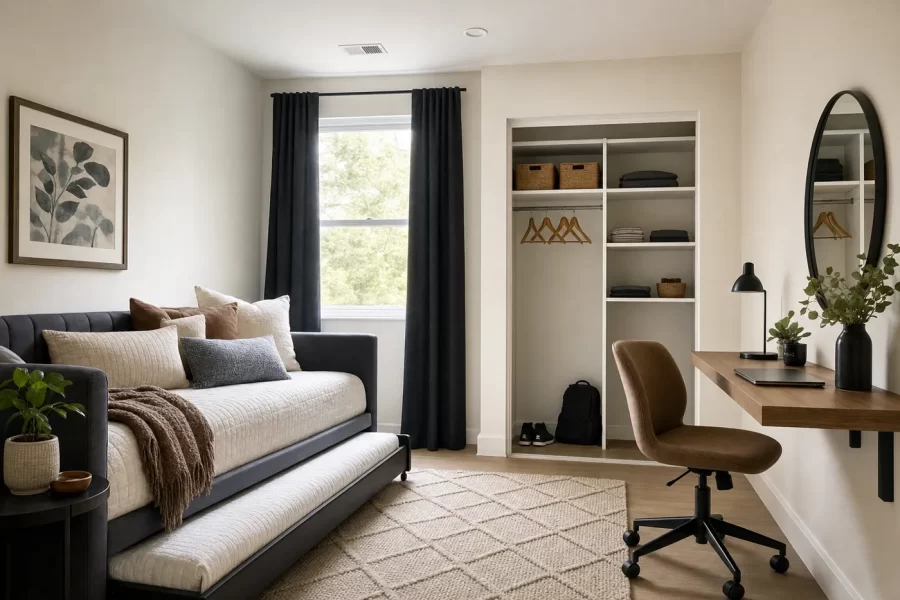
Turn a Spare Room Into a Guest-Ready Flex Space
A step-by-step guide to converting a spare room into a flex space: daybed or murphy bed choice, blackout window treatment, split storage, and daily-use layout.
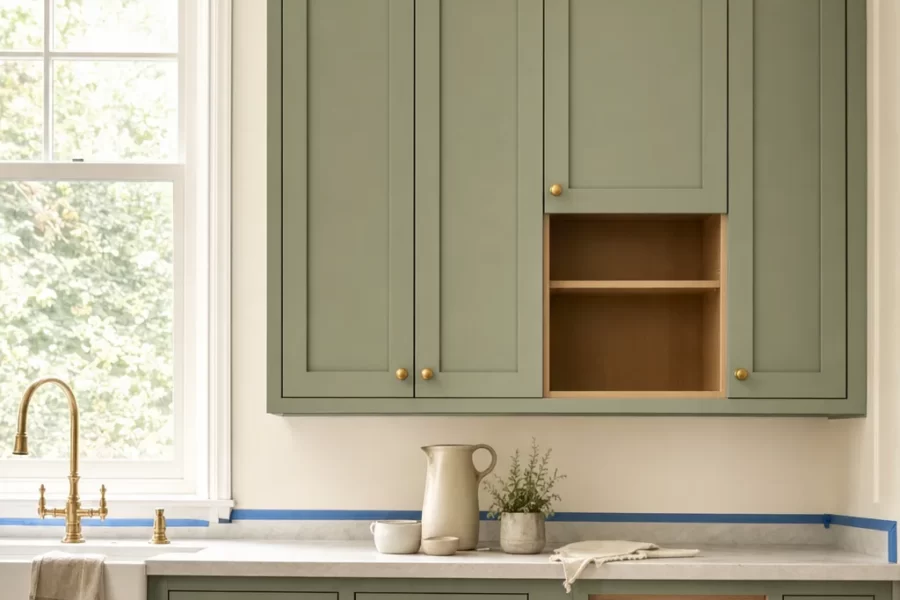
How to Paint Kitchen Cabinets Like a Pro
A step-by-step DIY guide to painting kitchen cabinets: degreasing, sanding, priming, and roller technique for a factory-smooth finish on a weekend budget.