Paint a Room Like a Pro: The Order of Operations
Pros don't paint faster because they rush — they paint faster because they never do anything twice. The whole secret is sequence.
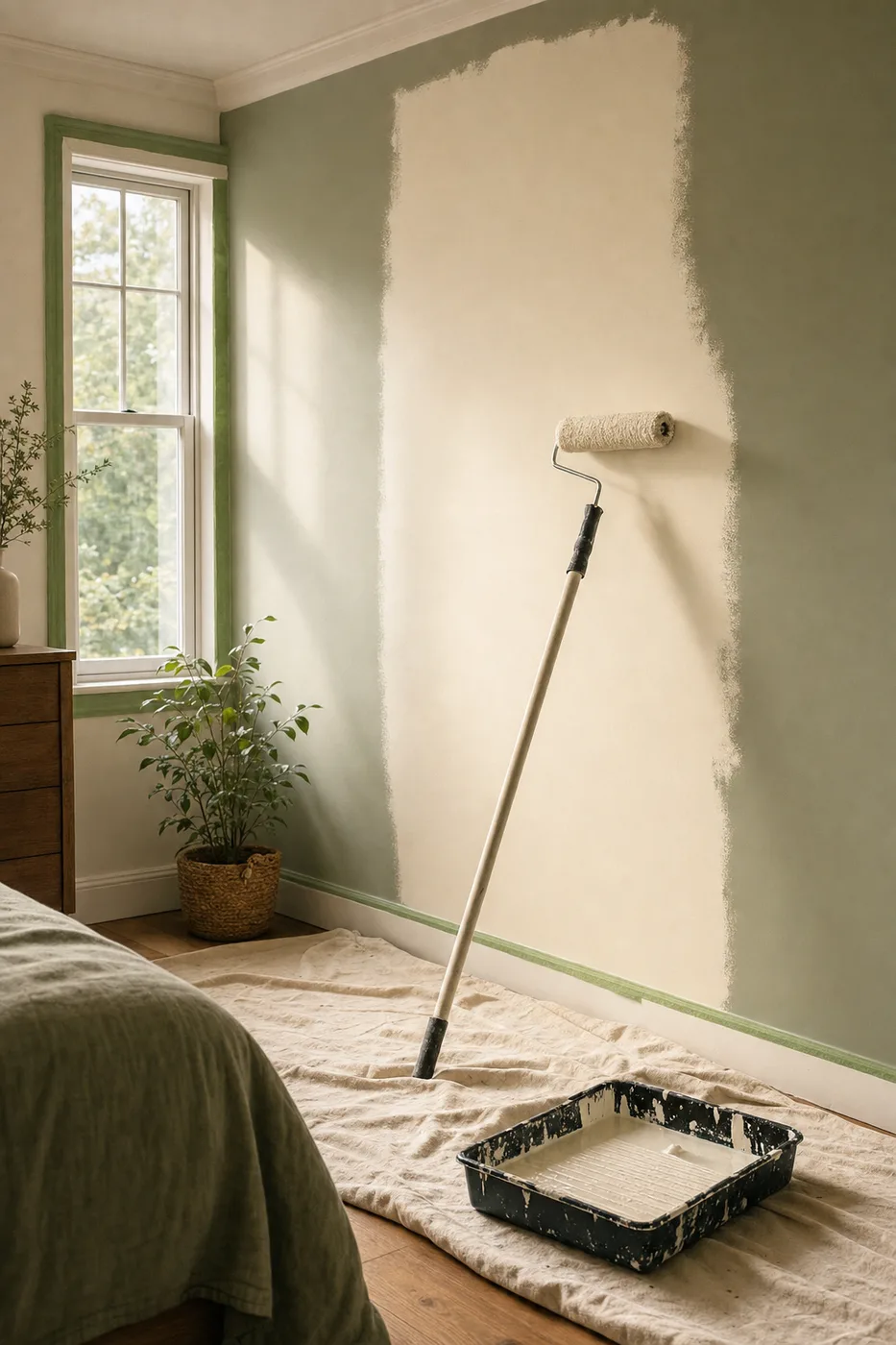
Everyone has painted a room; few have painted one that looks sprayed-on smooth from every angle at 5 p.m. The difference isn’t talent or a $60 brush. It’s sequence — pros work in an order where every step protects the last one and nothing gets touched twice.
Prep is half the hours
Empty the room or island the furniture under drop cloths. Remove outlet covers — taping around them takes longer than unscrewing them. Fill every nail hole and ding with spackle, sand flush, and spot-prime the patches and any water stains; unprimed spackle flashes through finish paint as dull spots forever. Wipe the baseboard tops: rolled paint rains a fine mist that turns dust into fuzz.
Ceiling first, always
Any ceiling work drips and mists downward, so it goes first. Cut in the perimeter with a brush, then roll in overlapping rows toward the main window so shadows don’t catch lap lines. Flat ceiling paint hides everything; anything glossier broadcasts every roller mark.
Cut in one wall, then roll that wall
The amateur move is cutting in the whole room, breaking for lunch, then rolling. By then the cut lines are dry, and rolling over dried edges leaves a picture-frame halo. Work one wall at a time: brush a 2-inch band at the ceiling, corners, and trim, then immediately roll that wall while the band is wet, so brush and roller texture blend.
Roll in a W, finish in one direction
Load the roller evenly, lay paint in a loose W to distribute it, fill the W in, then finish the section with light, straight, top-to-bottom strokes in one direction. Don’t press a drying roller harder to stretch paint — that’s what leaves stripes. Reload instead.
Second coat by the clock, trim last
Respect the recoat window on the can — usually 2 to 4 hours. One thick coat is weaker and uglier than two proper ones. Trim goes last: tape the fresh, fully-dry walls, and pull the tape while the trim paint is still slightly soft.
Buy all the paint for a room at once and box it — pour the gallons together into one bucket and stir. Tint drifts slightly can differ between cans, and a mid-wall can change is exactly where you’ll see it.
Amateurs paint the same wall twice. Pros never touch anything that’s already right.
The walk-away test
Before cleanup, stand at the window and look across each wall against the light — raking light reveals misses and thin spots that head-on viewing hides. Touch up now, while the roller is wet and the color is an exact match. Then wash the brush like you mean to keep it, because you do.
Keep the momentum going
All articles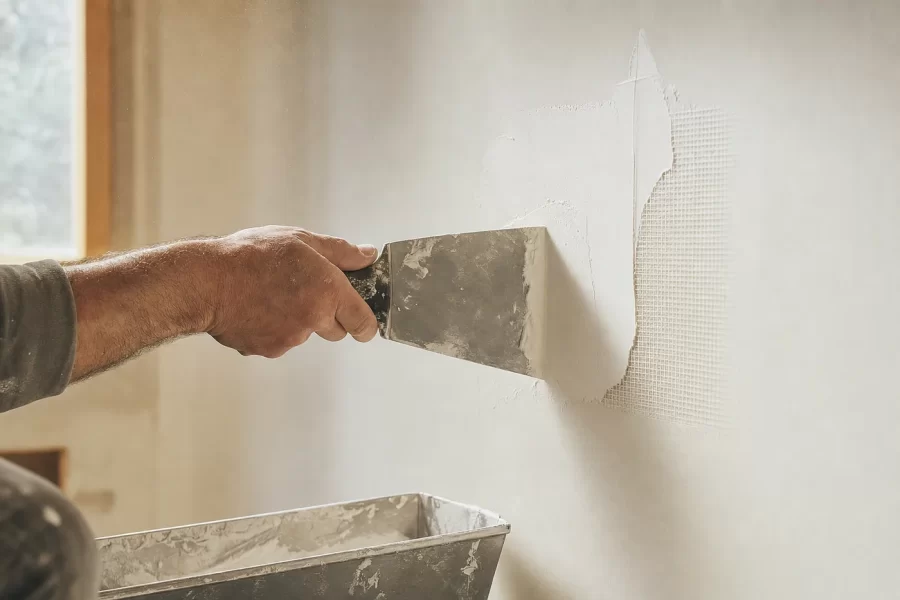
Patch Any Drywall Hole, From Nail Pops to Doorknob Craters
Four sizes of drywall repair — nail holes, screw pops, fist-size holes with mesh, and large cutouts with a California patch — plus feathering and texture matching.
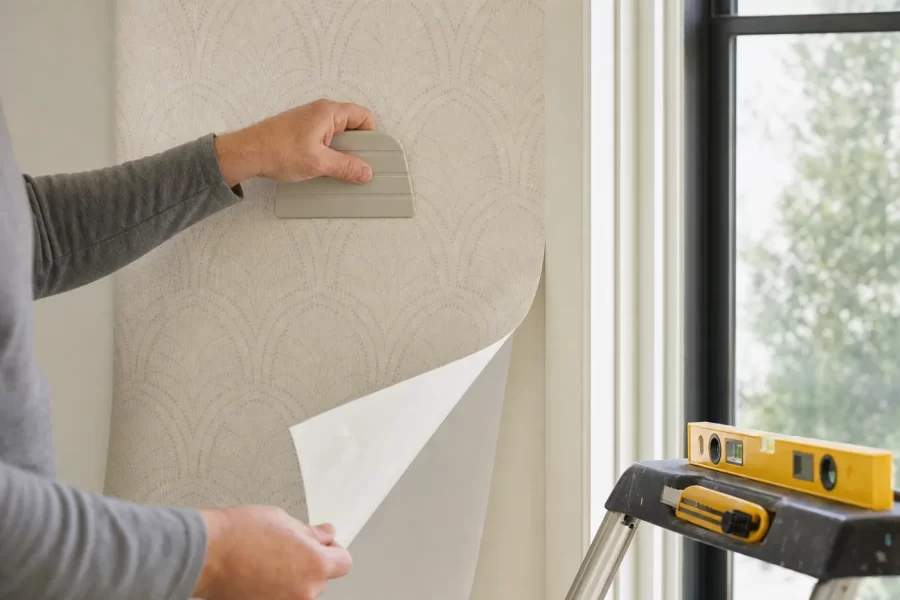
Hang Peel-and-Stick Wallpaper Straight, Seamless, and Bubble-Free
A step-by-step guide to hanging peel-and-stick wallpaper: wall prep, striking a plumb line, pattern matching, smoothing, and trimming clean edges.
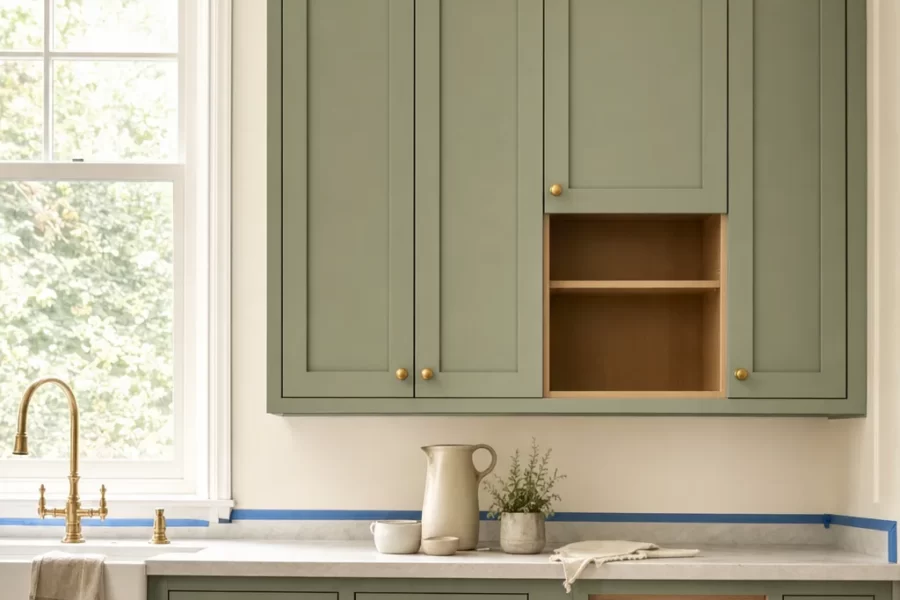
How to Paint Kitchen Cabinets Like a Pro
A step-by-step DIY guide to painting kitchen cabinets: degreasing, sanding, priming, and roller technique for a factory-smooth finish on a weekend budget.