Hang a Storm Door in a Day (and Have It Close Itself Softly)
A storm door adds a layer of weather, security, and screened airflow to the entry you use most. The install is one long lesson in reading a level.
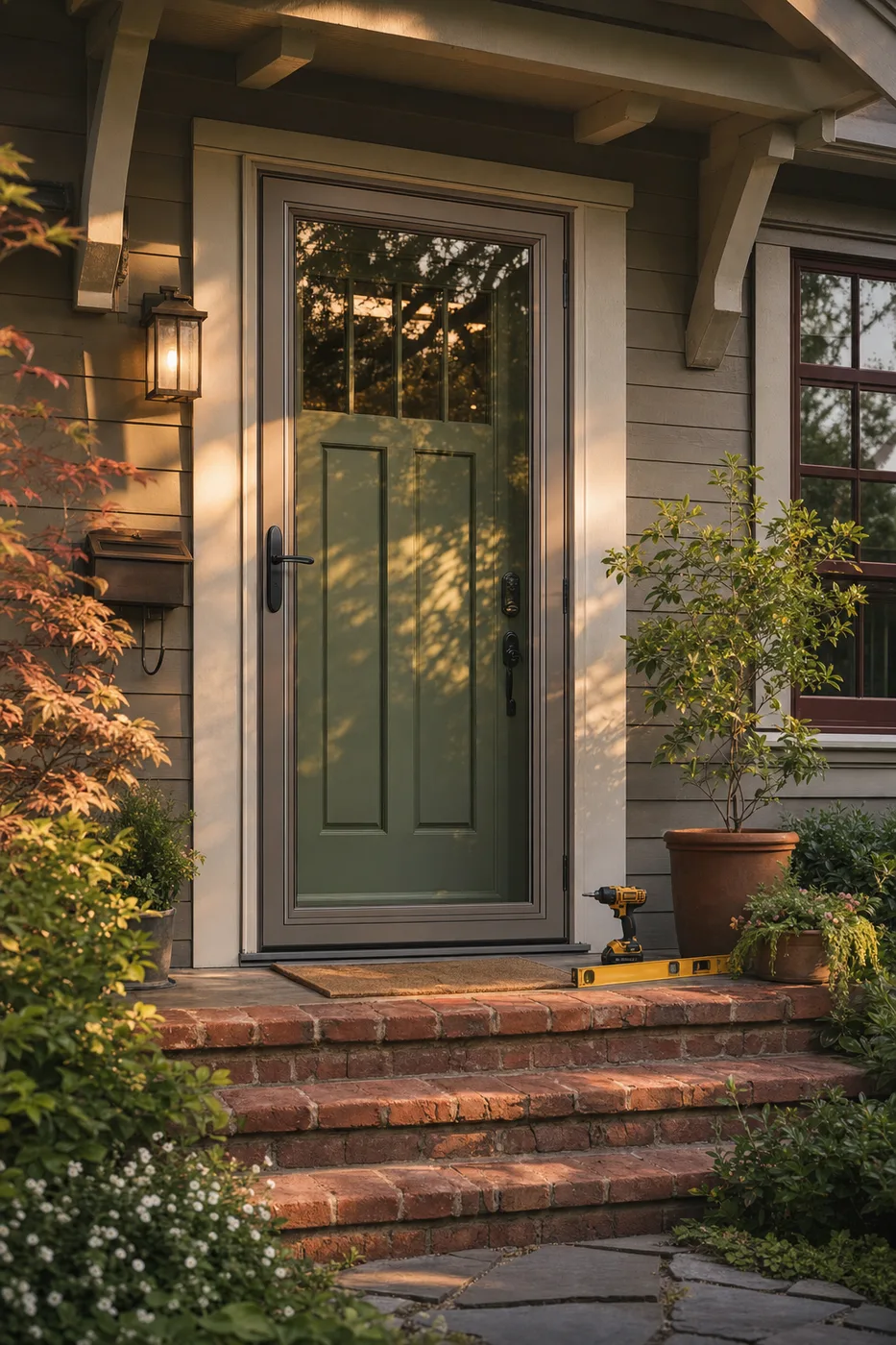
A storm door is the rare exterior project with a same-day payoff: an extra weather seal in January, a full-screen breeze in May, and a proper handle-and-deadbolt layer in between. Modern kits are genuinely DIY-friendly — pre-hung in a frame, closers included — and the whole install turns on getting one vertical rail truly plumb.
Measure and choose before you buy
Measure the opening width at top, middle, and bottom, and the height at both sides, at the face of the brickmold the door will mount to. Use the smallest numbers. Then pick the hinge side by walking through your own entry: the storm door should open the same direction as the main door and shouldn't swing into a porch light, railing, or the path from the driveway. Kits are reversible, but deciding now is free.
Trim and mount the hinge rail
The hinge-side rail (with the door attached) cuts to your opening height, angled at the bottom to match the sill slope — the kit template marks it. Screw the rail to the brickmold starting with one top screw, then plumb it with a level before setting the rest. Plumb here decides everything: a leaning hinge rail makes a door that swings itself open or shut forever.
Set the drip cap and latch rail
The top drip cap goes on with a consistent 1/8-inch gap to the door, then the latch-side rail, adjusted until the gap along the closing edge is even top to bottom. These rails have slotted holes for a reason — snug, check the gap, adjust, then tighten.
Install the handle set and strike
Handle holes are pre-punched; the lockset assembles through the door with a template for the strike on the latch rail. Test with the door moving slowly — the latch should click home without lifting or shouldering the door. Adjust the strike, not your expectations.
Closers, then the expander sweep
Mount the top and bottom closers and adjust their speed screws so the door closes fully but lands softly — you want the latch to catch on its own weight. Last, slide the bottom expander with its vinyl sweep down until it kisses the sill along its full length and screw it off. That sweep is the weather seal the whole project was for.
A dark full-glass storm door over a dark front door in full sun builds serious heat between the doors — enough to warp vinyl door skins and fog insulated glass. South- and west-facing entries want a ventilating storm door (screen that deploys) or a light color.
Get the hinge rail plumb and the door hangs itself. Everything after that is adjustment screws.
Seasonal care
Swap the glass and screen panels with the seasons — most kits store one inside the other. Once a year, hit the hinges with dry lube, re-check the closer speeds, and re-caulk the top drip cap. A $250 door maintained this way outlasts the front door behind it.
Keep the momentum going
All articles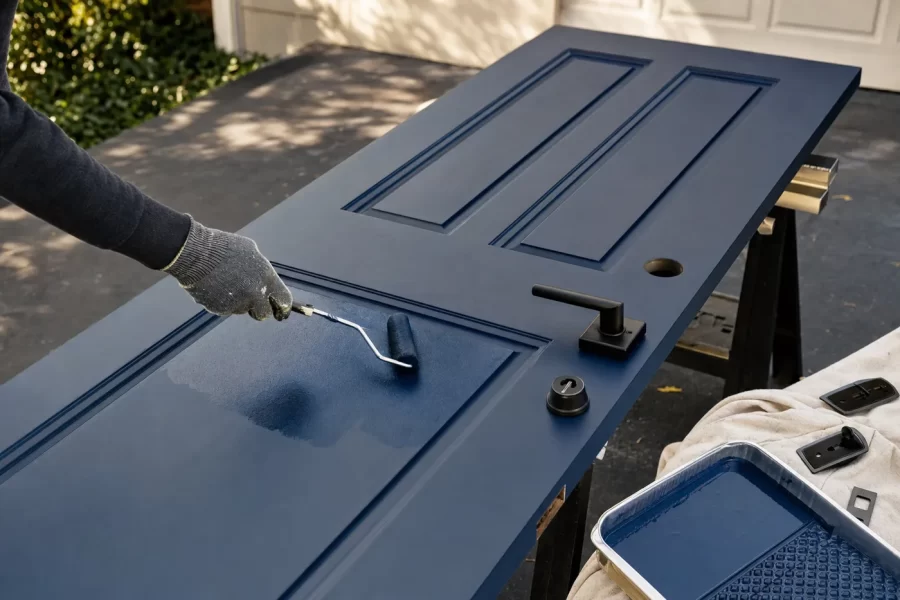
Paint Your Front Door and Swap the Hardware in a Day
A step-by-step guide to repainting a front entry door off its hinges: sanding, exterior enamel in the right sequence, and fitting new hardware that latches clean.
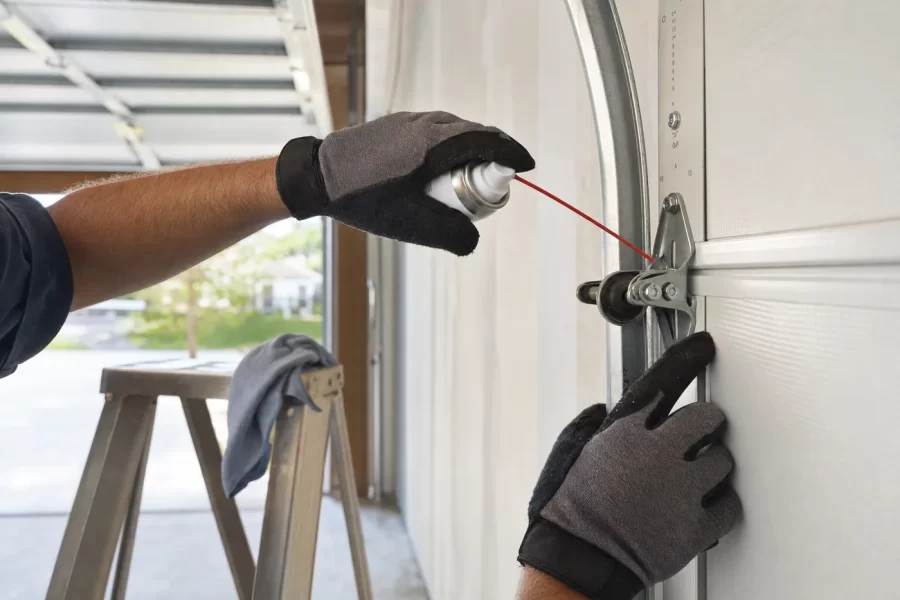
Tune Up a Noisy Garage Door Without Touching the Springs
A step-by-step guide to quieting a garage door: tightening hardware, lubricating rollers and hinges, testing balance and safety reverse — springs strictly off-limits.
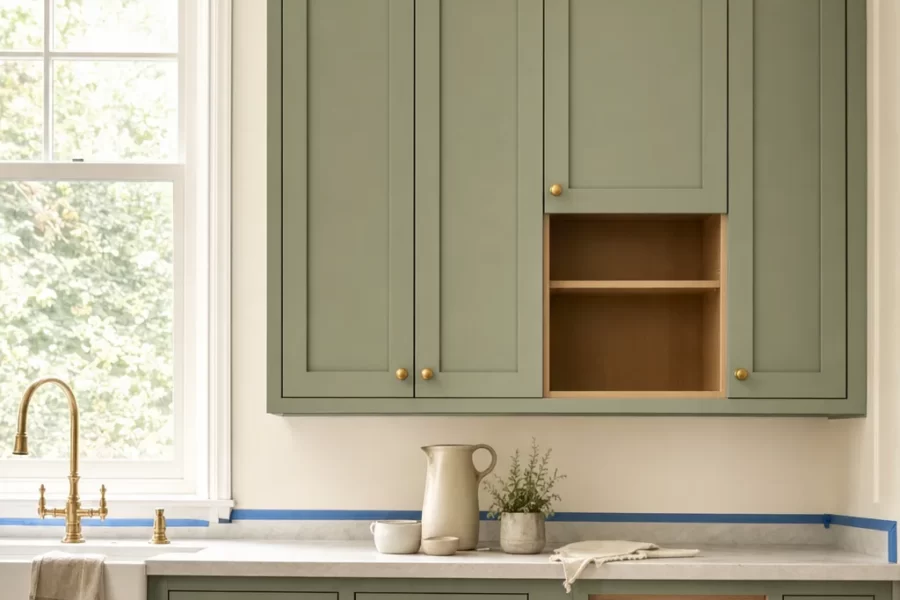
How to Paint Kitchen Cabinets Like a Pro
A step-by-step DIY guide to painting kitchen cabinets: degreasing, sanding, priming, and roller technique for a factory-smooth finish on a weekend budget.