Hang a Fireplace Mantel That Holds Real Weight
A mantel is the handshake of a living room — and it's one afternoon of work. The craft is in two numbers: clearance to the firebox and the size of your lags.
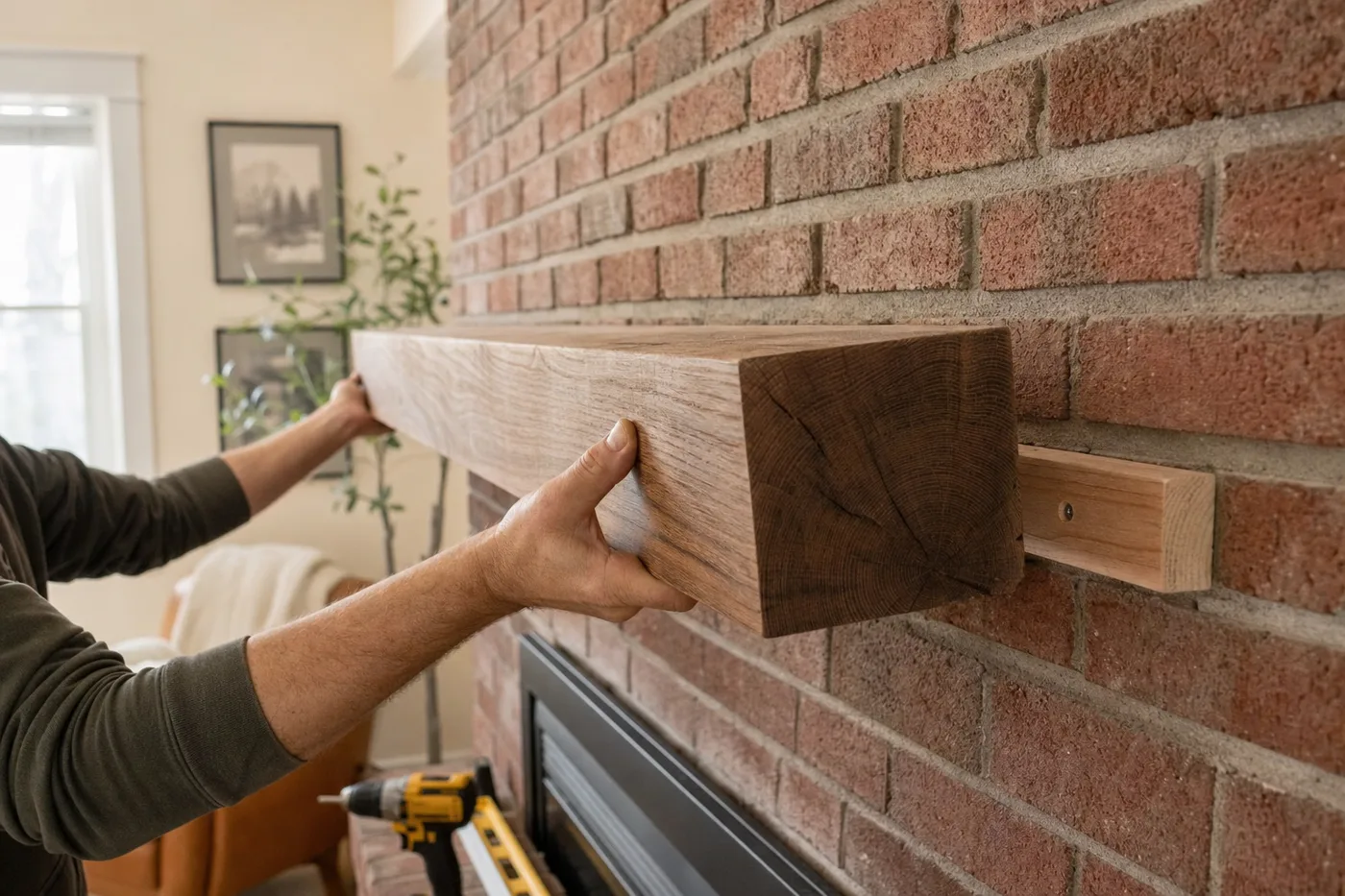
Few projects change a room’s center of gravity like a mantel. It frames the fire, carries the photos, holds the stockings — and it does all of that while cantilevered off a wall with people occasionally leaning on it. That means the invisible part, the cleat, matters more than the beam. Done right, a mantel install is a single afternoon; done casually, it’s a 60-pound beam waiting for a reason to come down.
Clearance before beauty
Building codes limit how close combustible material can sit to a firebox opening. The common baseline: a mantel projecting 1.5 inches needs at least 12 inches above the opening, and deeper mantels need more — roughly an extra inch of clearance per extra eighth-inch of projection, so a 6-inch-deep beam wants 18 inches or more. Gas units have their own numbers in the manual. Tape the proposed mantel outline on the wall, measure from the top of the firebox opening, and verify against your local code before drilling anything.
Find what you’re anchoring to
On a framed wall, mark every stud across the mantel’s span — you want lags in at least three. On brick or stone, plan your anchors into the solid brick faces, never the mortar joints, which crumble under load. Mark the mantel’s centerline off the firebox, not the wall, because fireboxes are rarely centered on the room.
Build and level the cleat
Rip a 2×4 lengthwise at 45 degrees to make a French cleat, or use a straight ledger if your mantel is a solid beam getting screwed down from above. Level it obsessively — a mantel is the most level-scrutinized surface in the house, judged daily against the TV above it and the firebox below.
Lag it like it’s structural, because it is
Into studs: 3/8-inch lag screws, 4 inches long, two per stud, pre-drilled. Into masonry: a hammer drill, sleeve anchors rated for at least 200 pounds each, and holes blown clean with a straw before the anchor goes in — dust in the hole quietly halves an anchor’s grip.
Hang the beam and lock it
A hollow box mantel slides over the cleat like a sleeve; a solid beam sits on the ledger. Either way, check level again, then lock the mantel to the cleat with trim screws driven up from underneath, where nobody will ever see them. A bead of construction adhesive along the cleat kills any future creak.
Test the finished mantel with a straight 50-pound pull-down before you decorate it. If anything shifts, flexes, or squeaks, find out now — not the evening a guest steadies themselves on it. And never mount a TV above a wood-burning firebox without checking the temperature at mantel height during a long fire; sustained heat over about 100 degrees cooks electronics.
Everyone sees the beam. The cleat is the actual project.
The long game
Solid wood beams check and crack a little as they finish drying in a heated room — that’s character, not failure. Re-tighten masonry anchors once after the first heating season, dust the top with the same care as any finished furniture, and the mantel outlasts every couch that ever faces it.
Keep the momentum going
All articles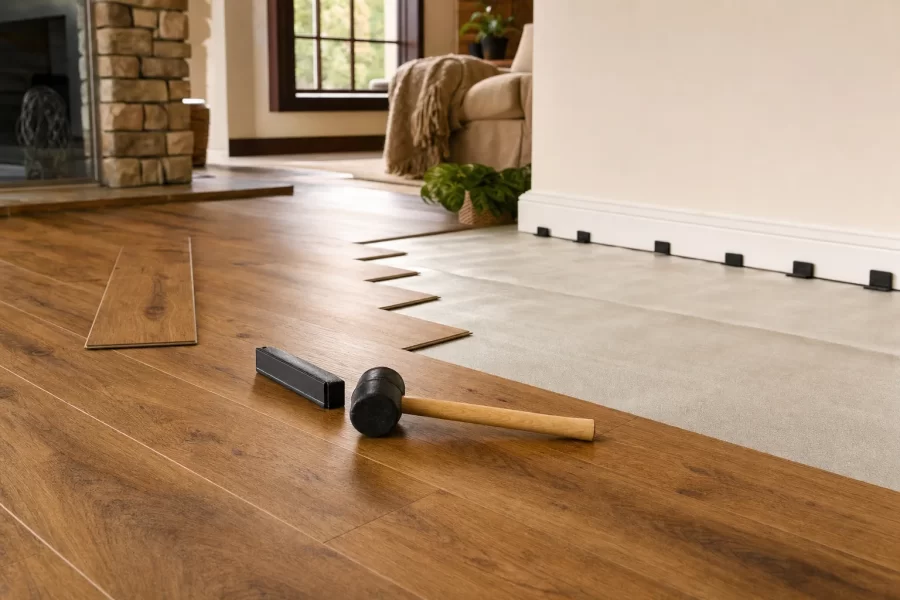
Installing Luxury Vinyl Plank Flooring: A First-Timer’s Guide
How to install click-lock luxury vinyl plank (LVP) flooring: subfloor prep, layout math, expansion gaps, and the tapping technique that prevents gapped seams.
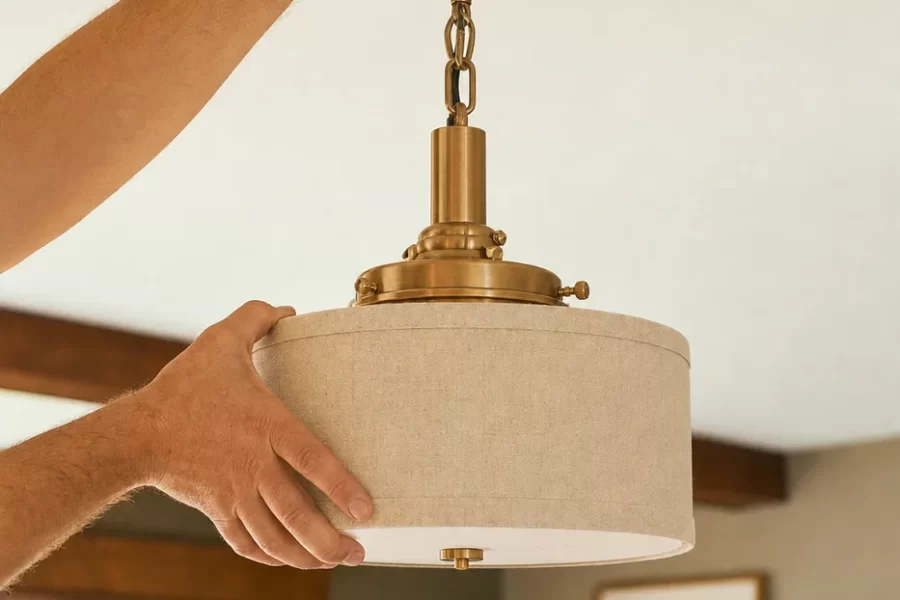
Replace a Ceiling Light Fixture, Safely and Squarely
Swap a dated ceiling light for a new fixture: breaker safety, non-contact voltage testing, wire connections that last, and getting the canopy tight to the ceiling.

How to Paint Kitchen Cabinets Like a Pro
A step-by-step DIY guide to painting kitchen cabinets: degreasing, sanding, priming, and roller technique for a factory-smooth finish on a weekend budget.