Design and Install a Custom Closet System for Under $400
A wire shelf and one sagging rod waste half of every closet. A weekend and a modular system recover it — no custom millwork required.
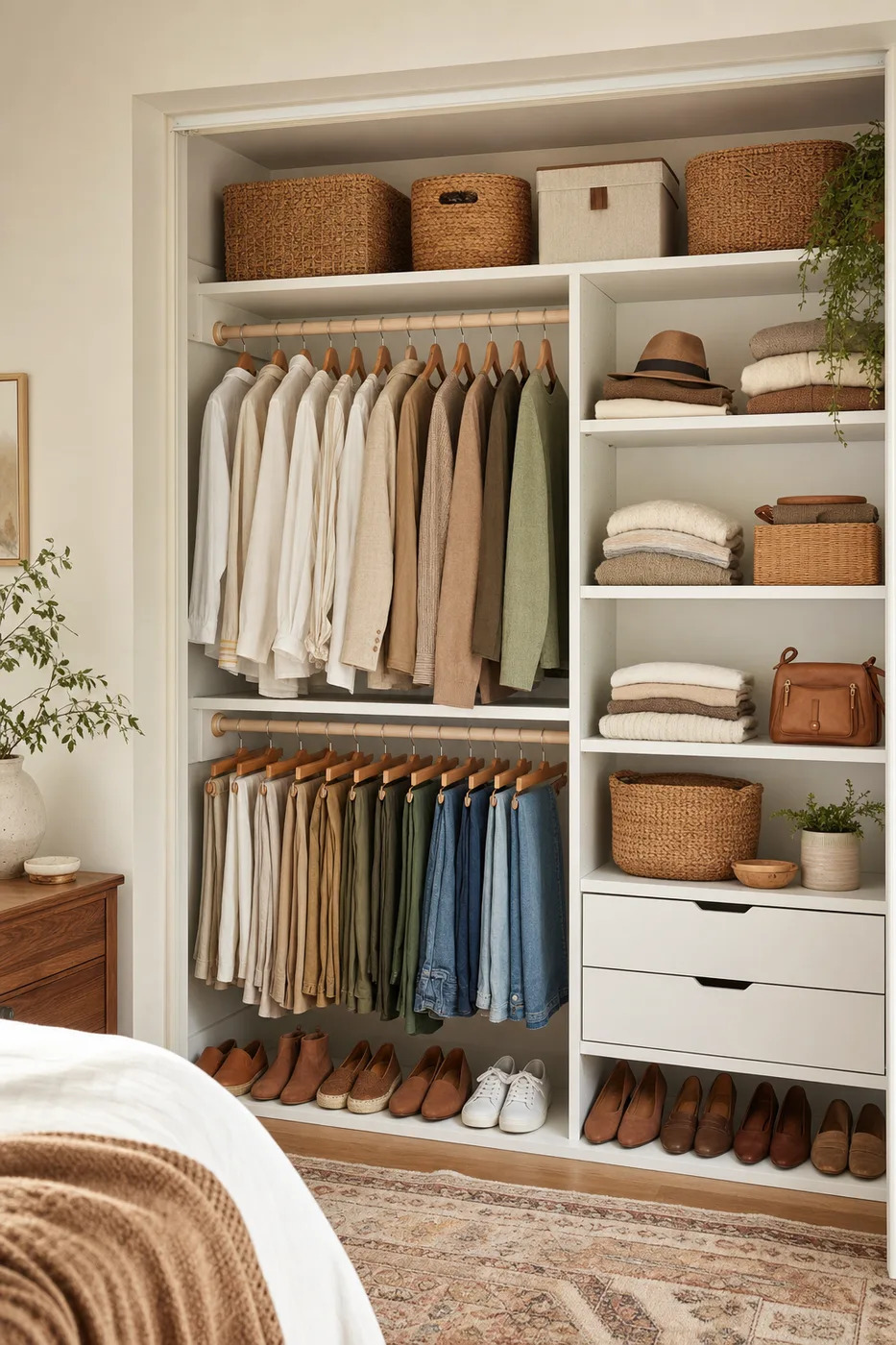
Builder closets are built for a house on paper: one rod, one shelf, whatever width the framer left. Real wardrobes are mostly shirts and pants that hang at half height — which means half the closet’s vertical space does nothing. A modular rail system fixes that for a few hundred dollars, and installing one is a measuring project, not a carpentry project.
Design from your clothes, not the catalog
Count what you actually own: long-hang items (dresses, coats) need 65 inches of clear drop; everything else double-hangs at about 40 and 80 inches. Measure the closet’s width, depth, and any obstructions — outlet, light switch, baseboard heater. Then zone it: double-hang for the bulk, one narrow long-hang section, shelves above everything, and shoes at floor level. Most systems’ online planners are genuinely useful; take your measurements and let them draw it.
Empty, patch, paint
Strip the closet to bare walls, unscrew the old rod and shelf, and patch the holes — a closet is the lowest-stakes place you’ll ever practice drywall repair. A quick coat of paint now takes twenty minutes; after the system is up it takes never.
Hang one rail, dead level, on studs
Everything in a rail system hangs off one horizontal rail, so this is the whole job. Find every stud across the back wall and mark them with tape. Set the rail height per the instructions, level it obsessively, and screw into every stud it crosses. Where a stud refuses to line up with a rail hole, use a rated heavy-duty anchor — a loaded closet system carries a few hundred pounds.
Uprights, then brackets, then hardware
Hook the vertical standards onto the rail and space them per your plan — under 32 inches apart keeps shelves from sagging. Brackets, shelves, and rods click in from there; this part is furniture assembly. Cut rods and rails to length with a hacksaw and deburr the ends.
Load it and live with it a week
Hang the clothes, then resist perfecting it for a week. The system is adjustable on purpose — after seven mornings you’ll know which shelf is two inches too low and which rod deserves to be shoe storage. Adjust once, then it’s done for a decade.
Plastic cone anchors that come taped to cheap hardware are for pictures, not closets. Anything carrying clothing weight goes into a stud or a rated toggle/self-drilling anchor — the failure mode at 2 a.m. is the entire wardrobe on the floor with chunks of drywall attached.
One dead-level rail on studs is the whole installation. Everything else is clicking parts together.
The payoff math
A standard 6-foot closet with one rod offers about 6 linear feet of hanging. Zoned with double-hang, the same box yields 10 to 11 feet plus shelving — nearly double the storage inside the same walls, for the price of one flat-pack dresser.
Keep the momentum going
All articles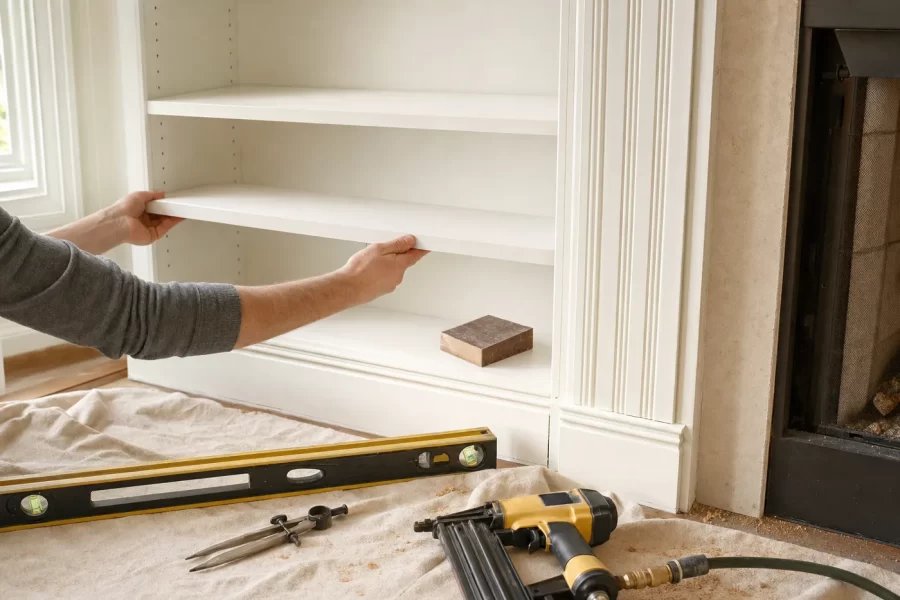
Build Alcove Built-Ins That Look Original to the House
A step-by-step guide to building alcove built-in shelves: ladder frames, a scribed face frame, adjustable shelves, and paint that reads original.
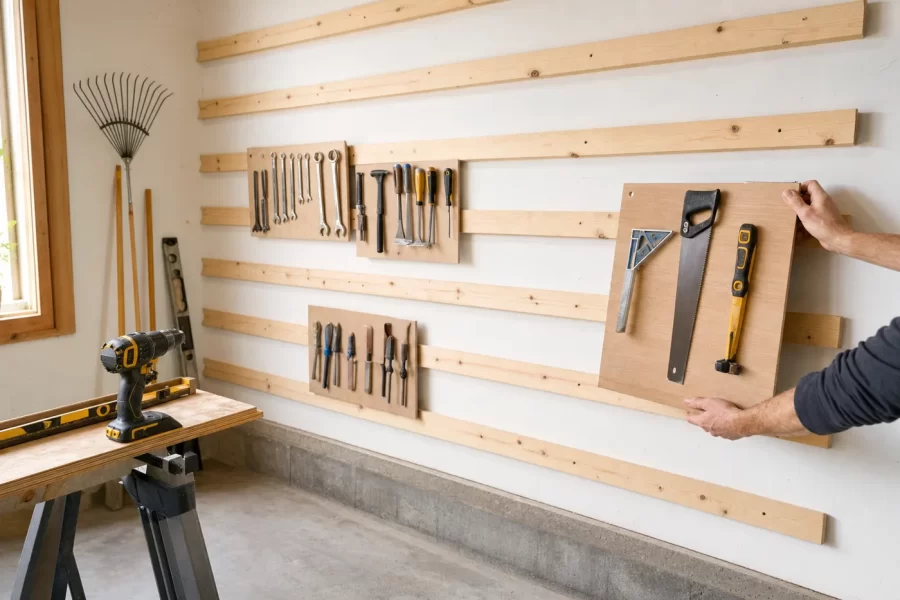
Build a Garage Storage Wall With French Cleats
A weekend guide to building a french cleat garage storage wall: 45-degree rips, stud mounting, custom holders, and zoning gear so the floor stays clear.
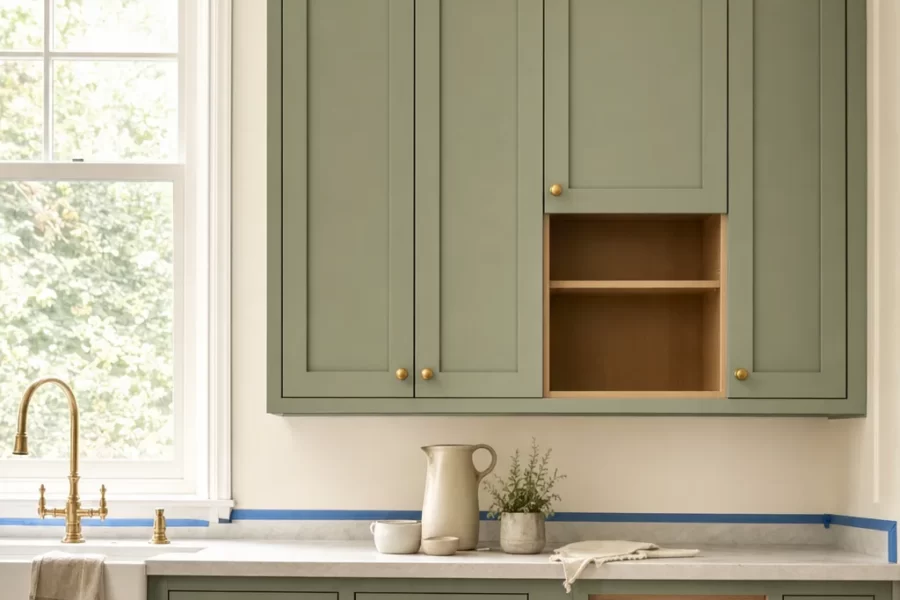
How to Paint Kitchen Cabinets Like a Pro
A step-by-step DIY guide to painting kitchen cabinets: degreasing, sanding, priming, and roller technique for a factory-smooth finish on a weekend budget.