Reseal Chimney Flashing Before It Stains Your Ceiling
That brown halo on the ceiling near the fireplace almost always starts at the flashing, not the shingles. Caught early, the fix is a wire brush and a $12 tube of sealant.
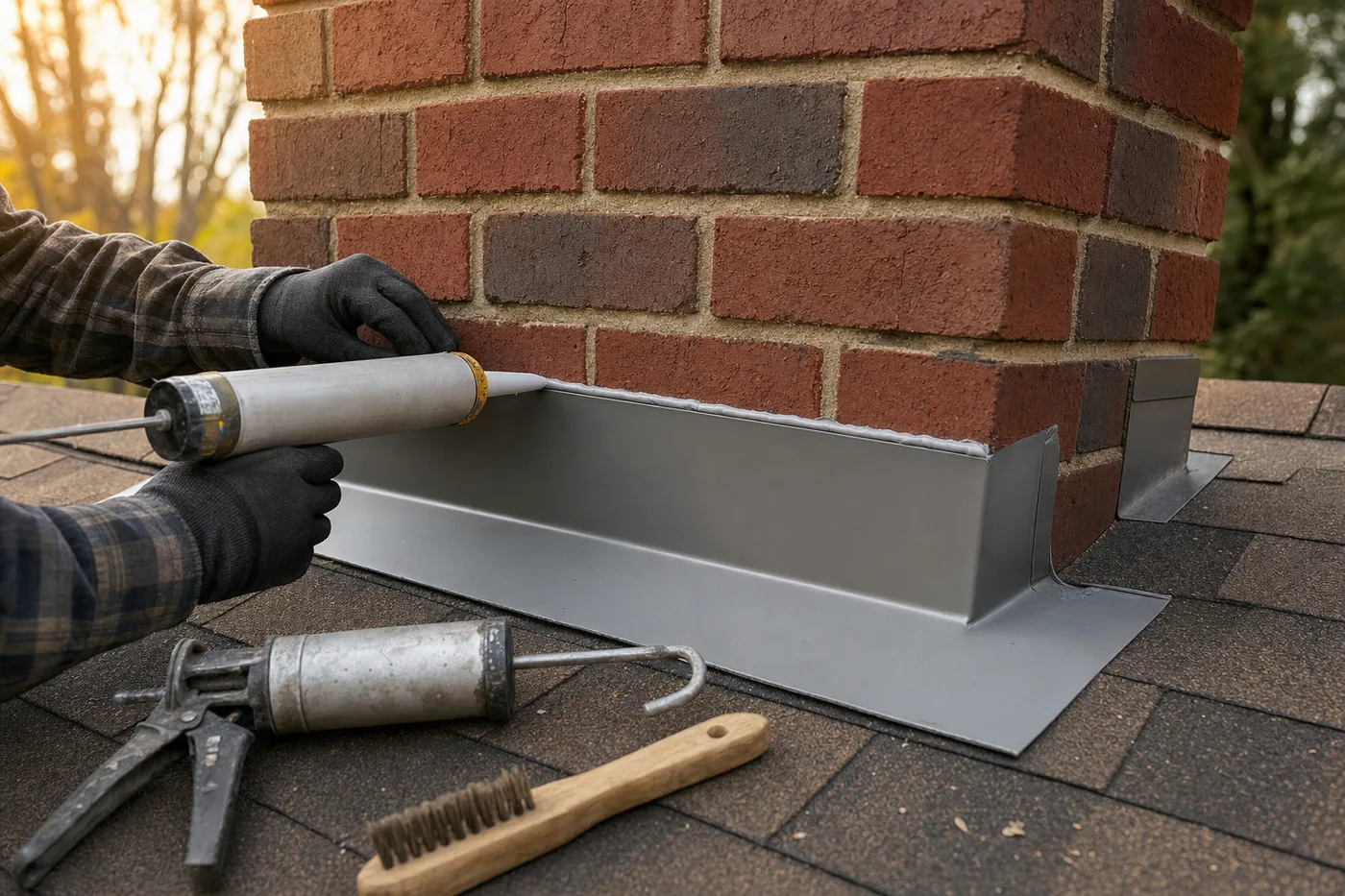
Chimneys are the hardest-working leak point on any roof: a masonry tower punched through the shingle field, moving differently than the wood structure around it with every freeze and heat wave. The metal flashing that bridges the two is brilliant when intact and sneaky when it fails — water follows rafters sideways for six or eight feet before it drips, so the stain shows up nowhere near the actual gap. If a ceiling near the chimney is freckling brown, the flashing is suspect number one.
Read the two-layer system before touching it
Proper chimney flashing has two layers. Step flashing tucks under each shingle course and turns up the brick; counterflashing is let into a mortar joint (the reglet) above it and folds down over the step flashing like a shirt over a waistband. Water can’t get behind the system — unless the sealant in that mortar joint crumbles, the counterflashing works loose, or a previous owner buried everything in roofing tar. Tar is the tell: it looks like a repair, works for two summers, then cracks and traps water behind itself.
Inspect and diagnose from the roof
On a dry, cool day, get up beside the chimney and look for the classics: sealant at the reglet joint that’s cracked or missing, counterflashing pulled away from the brick, rust pinholes, and old tar smears. Check the shingle-level step flashing for lifted or corroded pieces. Photograph everything — it’s easier to plan the fix on the ground than on a slope.
Strip the failed joint to bright and clean
Scrape out every crumb of old sealant and tar from the reglet with a putty knife, then wire-brush the metal and brick until the surfaces are clean and dull-bright. Wipe with a rag and denatured alcohol. New sealant bonded to old failed sealant fails on the old material’s schedule — the removal is the repair, same as caulk anywhere else.
Re-anchor loose counterflashing
Where counterflashing has walked out of its mortar joint, press it back in and lock it with lead wedges or hammer-in masonry fasteners every 8 to 10 inches before sealing. Sealant is a gasket, not a structural fastener — a bead asked to hold metal against thermal movement lets go within a couple of seasons.
Seal the reglet with the right tube
Run a steady bead of polyurethane or butyl flashing sealant along the joint where counterflashing meets brick, and tool it into the gap so it wets both surfaces. Seal vertical corner laps in the metal too. Leave the bottom edge of the counterflashing open — it’s the drainage plane, and caulking it shut traps water behind the system on purpose.
Test with a hose before trusting it
Have a helper watch the attic with a flashlight while you run a gentle hose stream on the flashing for ten minutes, starting low and working up. No drips, no darkening rafters — done. Water appearing high on the chimney despite good flashing points to a failed crown or saturated brick, which is a masonry problem with a different fix.
Resealing joints is DIY; replacing step flashing means lifting shingle courses and bending metal, and cutting a new reglet means grinding mortar. If the metal itself is rusted through or was never installed correctly, that’s a roofer-and-mason job — pay for it once instead of chasing the stain for years.
Roofing tar on a chimney isn’t a repair. It’s a note from the past that says the leak is still here.
Stay ahead of it
Put the chimney on a two-year inspection cycle — binoculars from the ground work for the first pass. Sealant at the reglet is a five-to-ten-year wear item, exactly like caulk in a shower, and a $12 tube on schedule is the entire cost of never meeting the alternative: stained ceilings, wet insulation, and framing repairs measured in thousands.
Keep the momentum going
All articles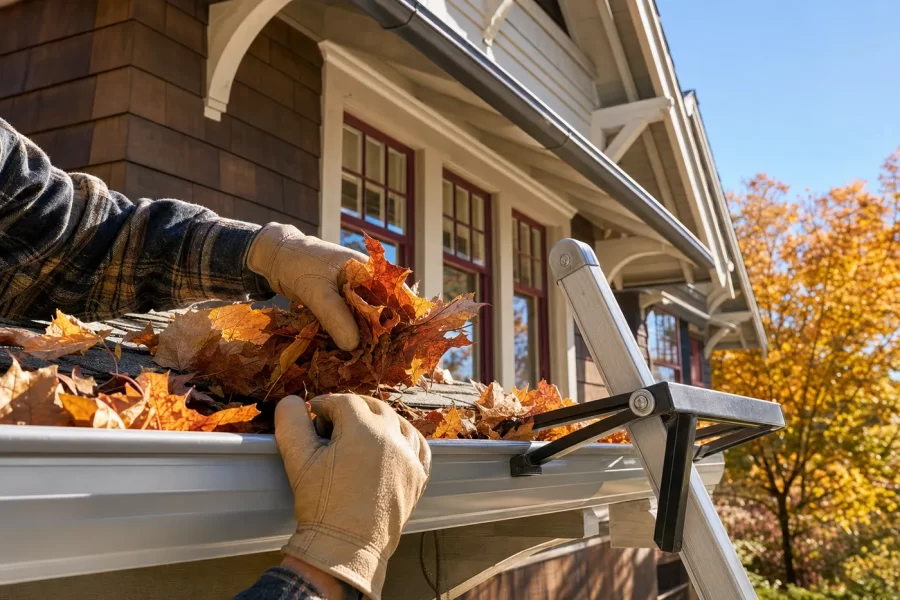
The One-Morning Gutter Tune-Up That Prevents Basement Water
A seasonal gutter maintenance routine: safe ladder work, clearing and flushing, resealing end caps and seams, correcting pitch, and extending downspouts.
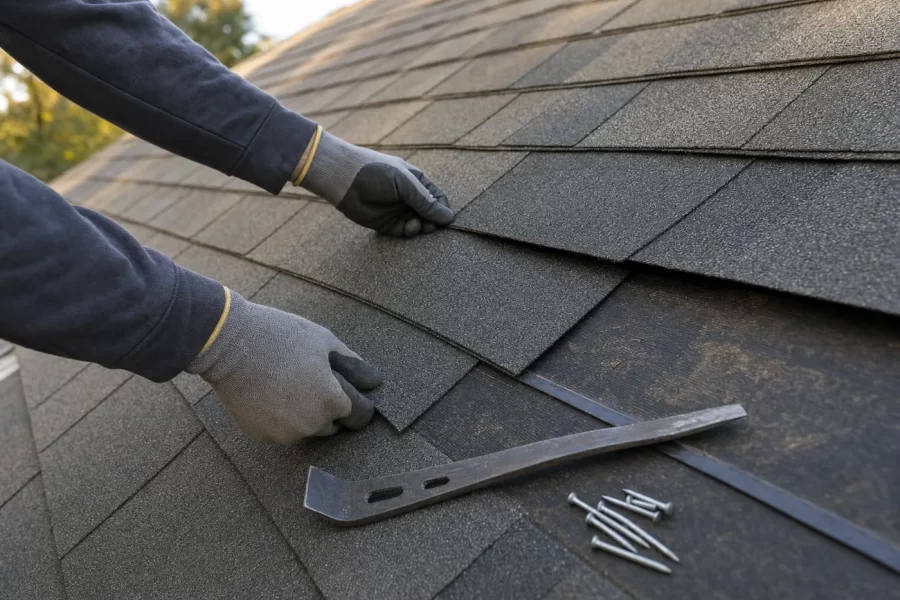
Replace Damaged Asphalt Shingles Safely, One Tab at a Time
A step-by-step guide to replacing wind-torn or cracked asphalt shingles: breaking the seal, pulling eight nails, nailing on the line, and hand-sealing.

How to Paint Kitchen Cabinets Like a Pro
A step-by-step DIY guide to painting kitchen cabinets: degreasing, sanding, priming, and roller technique for a factory-smooth finish on a weekend budget.