The One-Morning Gutter Tune-Up That Prevents Basement Water
Most wet basements and rotted fascia trace back to a $0 problem: gutters that stopped moving water. One morning, twice a year, keeps the whole system honest.

Gutters are the cheapest water-management system a house has, and the most neglected. When they clog or lose pitch, water overshoots into flowerbeds, soaks the foundation, wicks into fascia boards, and shows up years later as a musty basement and a carpenter’s invoice. The fix is a morning of unglamorous maintenance — and running water is the diagnostic tool the whole routine is built around.
Ladder rules that aren’t optional
Set the ladder on firm, level ground at the 4-to-1 angle (one foot out per four feet up), use a standoff so you’re not crushing the gutter you’re fixing, and keep your belt buckle between the rails — move the ladder instead of reaching. Someone should know you’re up there. Every gutter shortcut injury is a reach that felt fine right up until it wasn’t.
Scoop, then flush
Clear debris by hand or scoop into a hooked bucket, working away from the downspout so you don’t pack it tighter. Then flush the run with a hose toward the downspout at full flow. This is the test that matters: water should sheet along the bottom and disappear down the spout with nothing left standing.
Unblock the downspouts
Gurgling or backup means the clog is in the spout — usually at the top elbow. Rap the spout and listen for the rattle, feed the hose down from the top, or disassemble the bottom elbow and push through. A blocked underground drain line announces itself here too: water backing up out of the ground connection means that line needs snaking or bypassing with a surface extension.
Reseal drips, re-screw the loose
While the system is wet, walk the run: dripping end caps, weeping seams, and any hanger that moves get flagged. Dry the metal, scrub the joint, and lay gutter seal inside the trough over clean metal. Loose spikes upgrade to screw-in hangers — spikes that worked loose once will again.
Check pitch and where the water lands
Standing water after the flush means bad pitch: gutters should fall roughly a quarter inch per ten feet toward the spout — adjust hangers until puddles drain. Then follow the water’s final destination. It should exit 4 to 6 feet from the foundation onto splash blocks or extensions; a downspout dumping at the wall is how basements get wet by design.
Anywhere near the service drop — the overhead cable where power enters the house — is a no-ladder zone. Aluminum ladders and gutters both conduct; keep 10 feet of clearance and leave that section to a pro with the right equipment.
Run water through the system and it will tell you exactly what’s wrong. Gutters don’t keep secrets.
Twice a year, forever
Late fall after leaf drop and late spring after seed pods — that’s the schedule. Ten years of these mornings costs less than one fascia-and-soffit repair, and if the trees make it a monthly chore instead, that’s the honest signal it’s time to price gutter guards.
Keep the momentum going
All articles
Replace Damaged Asphalt Shingles Safely, One Tab at a Time
A step-by-step guide to replacing wind-torn or cracked asphalt shingles: breaking the seal, pulling eight nails, nailing on the line, and hand-sealing.
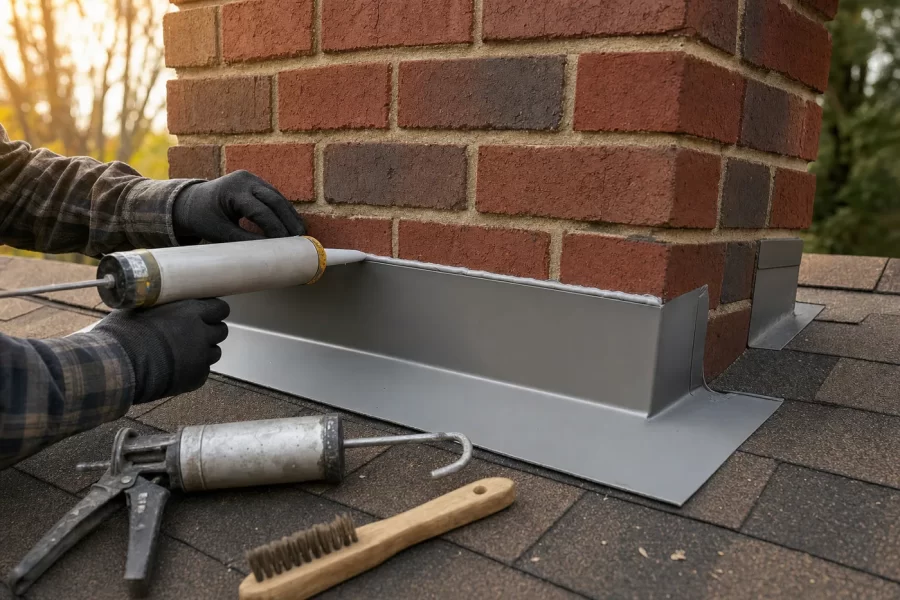
Reseal Chimney Flashing Before It Stains Your Ceiling
A step-by-step guide to resealing chimney flashing: reading the two-layer system, cleaning the reglet joint, choosing the right sealant, and when to call a pro.

How to Paint Kitchen Cabinets Like a Pro
A step-by-step DIY guide to painting kitchen cabinets: degreasing, sanding, priming, and roller technique for a factory-smooth finish on a weekend budget.