Tune Up a Noisy Garage Door Without Touching the Springs
The biggest moving object in your house rattles like a freight train because nobody has spent twenty minutes on it in a decade. Here's the twenty minutes.
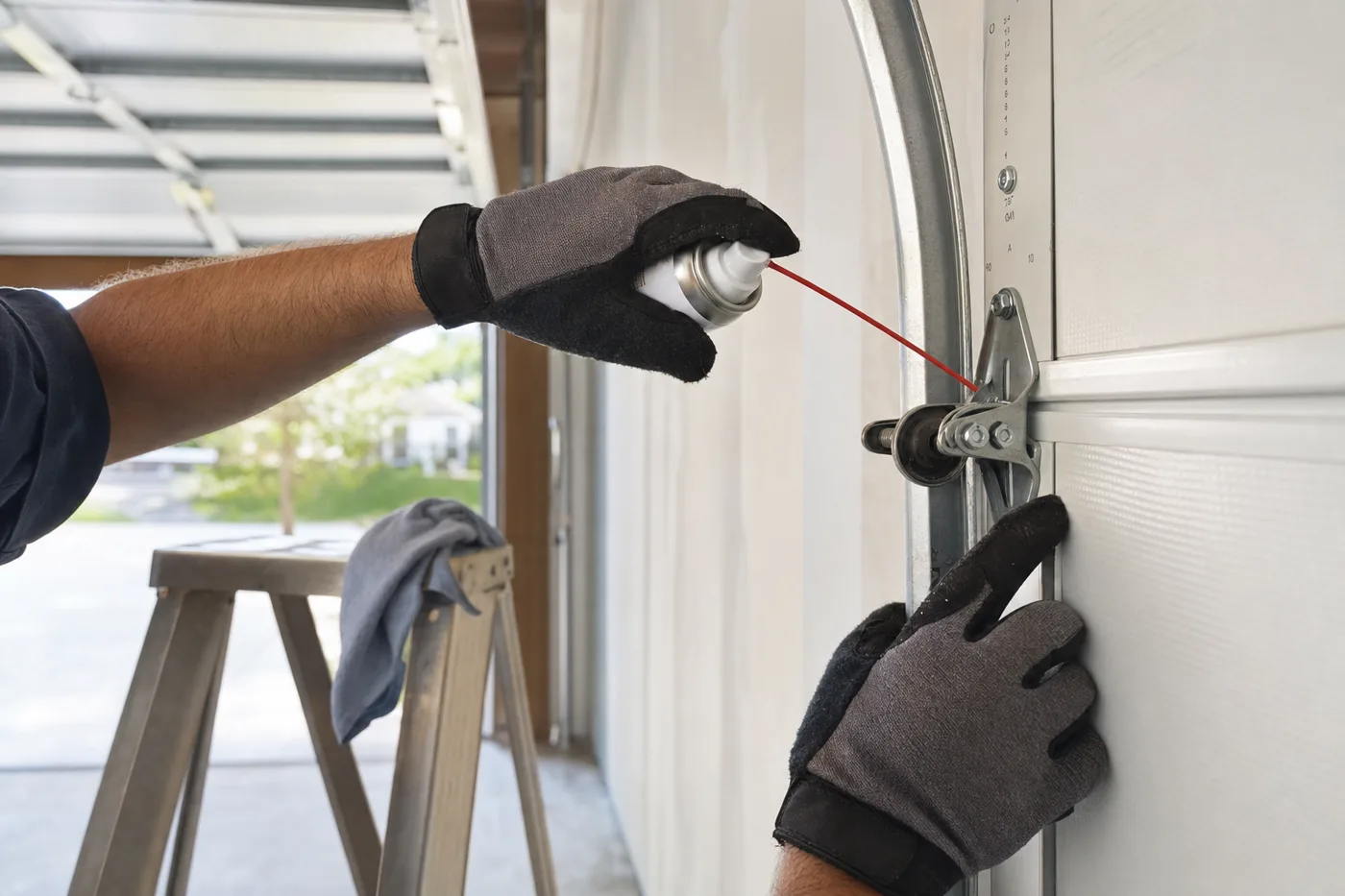
A garage door goes up and down a thousand-plus times a year, weighs as much as two refrigerators, and gets less maintenance than the lawn mower. The result is the neighborhood soundtrack: screeching rollers, banging panels, an opener straining against friction it was never meant to fight. A proper tune-up costs one can of the right lubricant and an afternoon — and it starts with a bright line about what you don’t touch.
The springs are not your project
The torsion springs on the shaft above the door (or extension springs alongside the tracks) store enough energy to lift 150-plus pounds, and they release it instantly through anything that slips — winding bars, knuckles, faces. Spring adjustment and replacement, and the lift cables attached to them, are professional work with proper bars and technique, typically $200 to $350. Everything else on this list is genuinely safe. Respect the line and the job stays a pleasure.
Watch and listen with the door in motion
Run the door twice and diagnose by ear: squealing means dry rollers and hinges, a single bang each cycle is usually one loose hinge or a flat-spotted roller, grinding points at the opener’s rail or chain. Then unplug the opener and pull the red release cord so the rest of the tune-up happens by hand.
Tighten every fastener on the moving side
Vibration backs bolts out over years. Snug every hinge bolt, the roller-bracket screws, the track brackets into the framing, and the opener rail’s lag screws into the header. Snug, not gorilla — lag screws in old wood strip easily, and a stripped hole is a bigger job than a loose bolt.
Lubricate the right parts with the right can
White lithium or garage-specific silicone spray goes on: roller bearings (the shaft and bearing, not nylon tires), every hinge pivot, the torsion spring coils (a light misting quiets the twang — spraying is fine, touching is not), and the opener’s chain or screw rail per its manual. Never lubricate the track itself; rollers should roll on clean, dry steel, and greasy tracks collect grit and make everything worse. Wipe the tracks clean with a rag instead.
Run the balance test
With the opener still disconnected, lift the door halfway by hand and let go. A balanced door floats there; a door that slams down or shoots up has spring tension trouble, which strains the opener’s motor every cycle — and that one goes on the pro’s list. Reconnect the opener when the checks are done.
Test both safety reverses
Lay a 2×4 flat under the door and close it: the door must reverse on contact. Then wave a broom through the photo-eye beam during a close: instant reverse again. If either fails, adjust the opener’s force and travel settings per the manual, and check the photo eyes for alignment and cobwebs. These two tests are the whole reason the tune-up matters in a house with kids or pets.
Never loosen the bolts on the bottom roller brackets — they anchor the lift cables, which are under full spring tension even with the door closed. That bracket is the one piece of hands-off hardware below head height, and it looks deceptively ordinary.
Lubricate the rollers, not the track. Tighten everything. Test the reverse. Leave the springs alone.
Twice a year, forever
Put the tune-up on the calendar with the smoke-alarm batteries: spring and fall, fifteen minutes each once you’ve done it once. Upgrade to nylon rollers (about $40 a set) the next time steel ones squeal and the door goes near-silent. A maintained door and opener routinely last twenty years; a neglected pair announces its decline to the whole street.
Keep the momentum going
All articles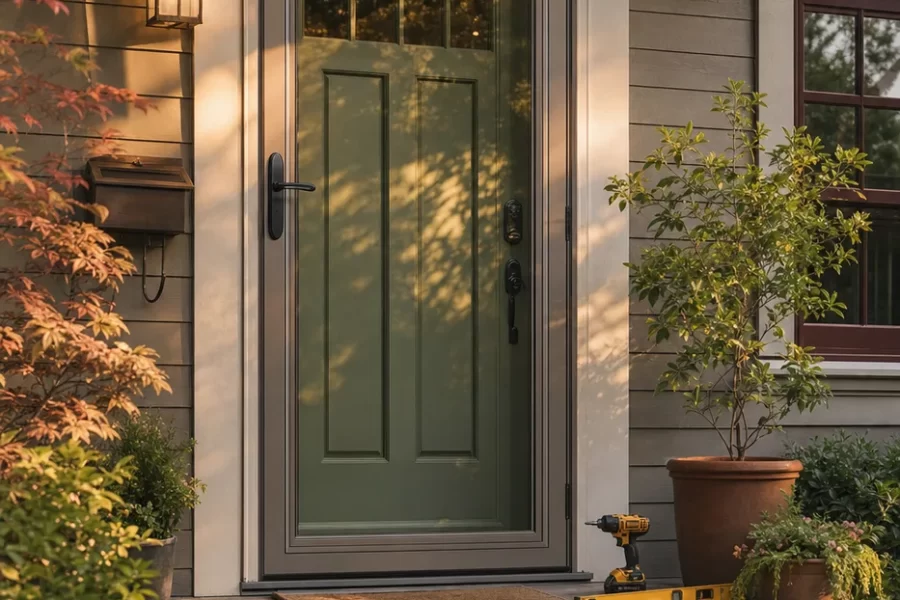
Hang a Storm Door in a Day (and Have It Close Itself Softly)
Install a full-view storm door: measuring the opening, hinge-side selection, mounting rail plumb, closer adjustment, and the expander sweep that seals the sill.
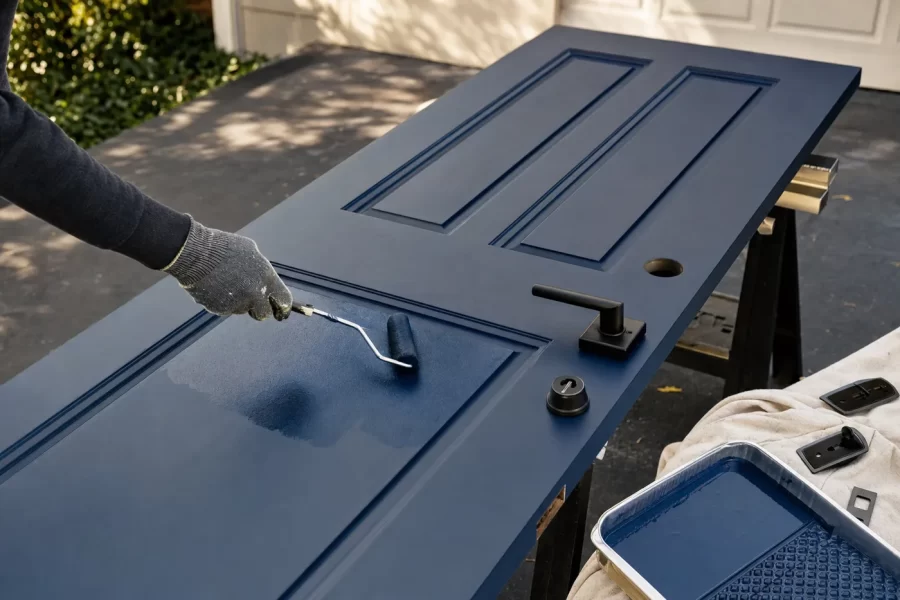
Paint Your Front Door and Swap the Hardware in a Day
A step-by-step guide to repainting a front entry door off its hinges: sanding, exterior enamel in the right sequence, and fitting new hardware that latches clean.
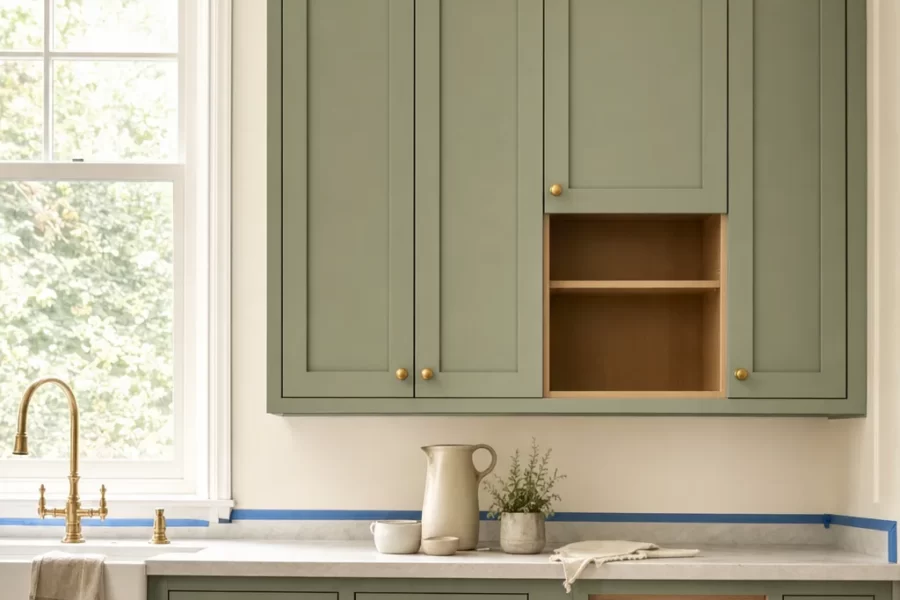
How to Paint Kitchen Cabinets Like a Pro
A step-by-step DIY guide to painting kitchen cabinets: degreasing, sanding, priming, and roller technique for a factory-smooth finish on a weekend budget.