Fix Cracked or Blown-Off Vinyl Siding With a $6 Zip Tool
A cracked siding panel lets rain behind the whole wall, and the fix takes one cheap tool and an afternoon. The trick is knowing vinyl hangs — it isn't nailed tight.
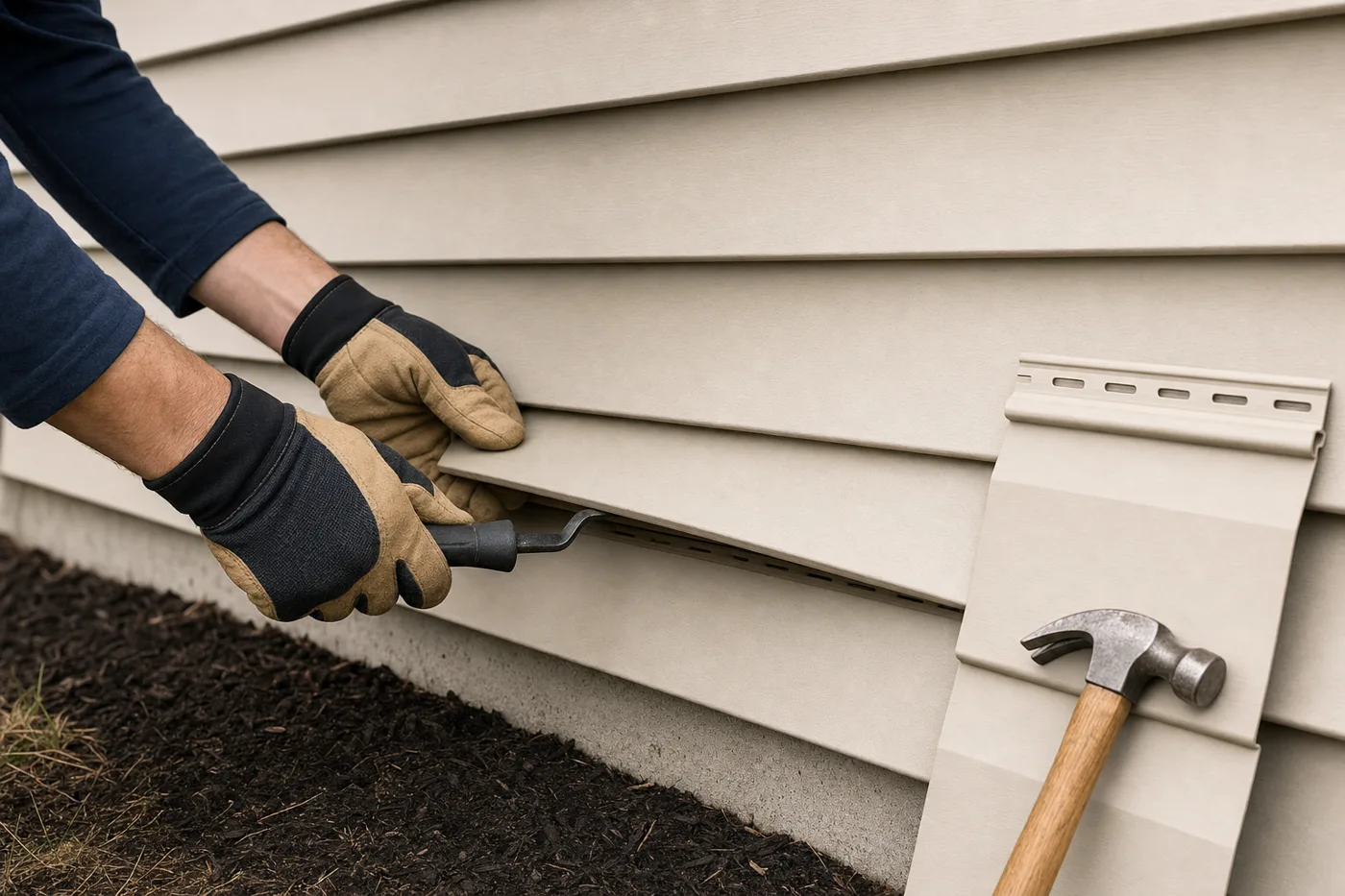
Vinyl siding fails in predictable ways: a mower flings a stone through a panel, hail stitches a line of cracks, or a wind gust unzips a poorly hung course and sails it into the yard. Behind every one of those failures is the same risk — water reaching housewrap and sheathing that were never meant to be the weather layer. The repair is one of the friendliest in exterior work, because vinyl was designed to be taken apart. A zip tool, a matching panel, and one rule about nails will get you an invisible fix.
Vinyl hangs. It is never nailed tight.
Every panel locks into the course below and hangs from nails driven through horizontal slots — loose, with about a nickel’s thickness of play. Vinyl expands and contracts up to a half inch across a long panel between winter and summer; nail it tight and it buckles into waves in July or cracks in January. Most siding failures you’ll ever see trace back to somebody’s tight nail.
Unzip the course above
Slip the zip tool’s hook under the bottom edge of the panel above the damaged one, catch the locking lip, and pull down and along the wall. The joint pops open with a satisfying zip. Work the whole length free, then rest that course up and out of the way — on a warm day it flexes easily; below about 40°F vinyl turns brittle, so save the job for milder weather.
Pull the nails and slide out the damaged panel
With the course above unlocked, the nail hem of the damaged panel is exposed. Work a flat bar under each nail head and pull straight out. The panel then unhooks from the course below and slides free. Inspect the housewrap behind it — small tears get sealant or housewrap tape now, while the wall is open.
Hunt down a color match
Vinyl fades, so a brand-new panel in the original color will read brighter than the wall around it. Best sources, in order: leftover panels in the garage or attic from the original install, a panel borrowed from a hidden area (behind a shrub, inside a gable) with the new bright panel installed there instead, or a supplier match to your profile and exposure. Take the damaged piece with you — profiles vary more than they look.
Hang the new panel loose
Hook the new panel onto the lock of the course below, center the nails in the slots — never through the vinyl face — and drive galvanized roofing nails into studs or solid sheathing, stopping a nickel’s thickness proud. The panel should slide side to side under your hand. If it doesn’t move, back the nails off until it does.
Zip the wall back together
Pull the bottom lip of the course above down over the new panel’s lock with the zip tool, pressing the joint closed behind the tool as you slide it along. Run your palm down the wall: every course should feel locked, flat, and slightly alive. That little rattle is correct — it’s the expansion room working.
Never caulk vinyl siding’s horizontal laps or bottom edges shut. The system is designed to drain and dry through those gaps; sealing them traps water against the sheathing and turns a cosmetic crack into a rot problem.
Vinyl siding hangs like a picture, not like a board. Nail it tight and summer will prove it to you.
Keep spare panels like spare buttons
Buy or salvage two extra panels while the match is easy and stash them flat in the garage — ten years of fade from now, they’ll be the only match that exists. Once a season, sight down each wall in raking light for waves or open locks and zip anything loose before the next wind event does the unzipping for you.
Keep the momentum going
All articles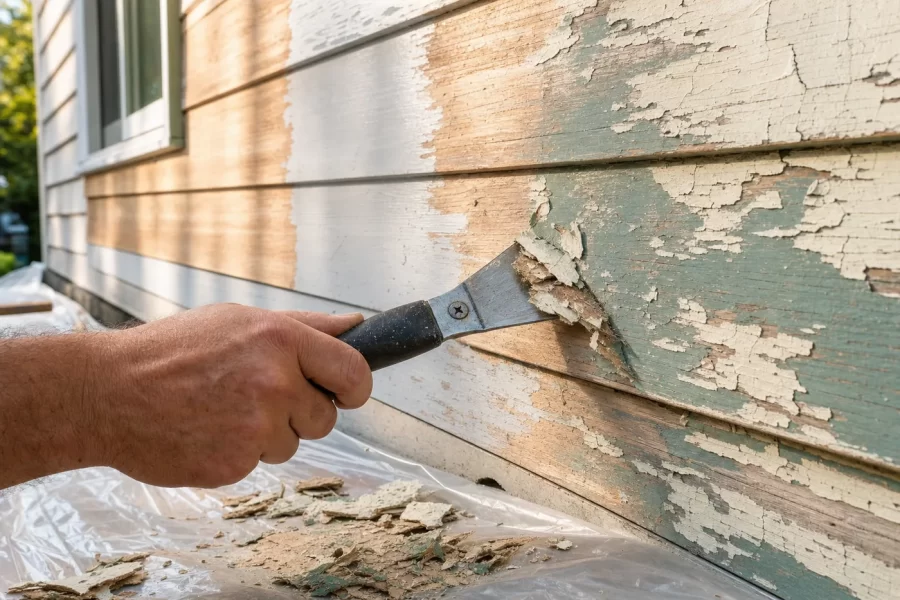
Wash, Scrape, Prime: The Prep That Makes Exterior Paint Last
Exterior paint prep done right: washing siding, scraping and feather-sanding failed paint, spot-priming bare wood, caulking, and reading the weather window.
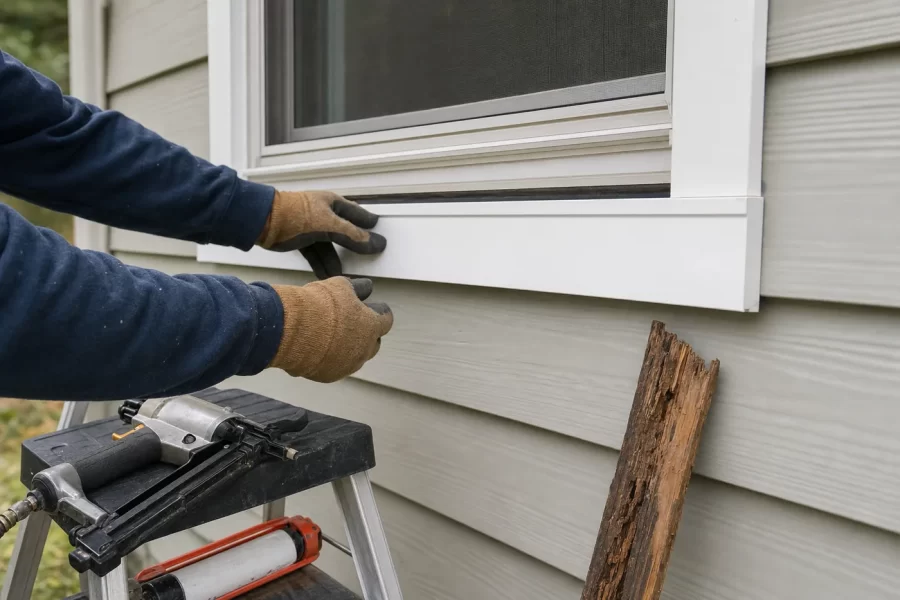
Replace Rotted Exterior Trim Before the Leak Reaches the Framing
A step-by-step guide to replacing rotted window and corner trim: finding the water source, choosing PVC or primed wood, flashing, and caulking.
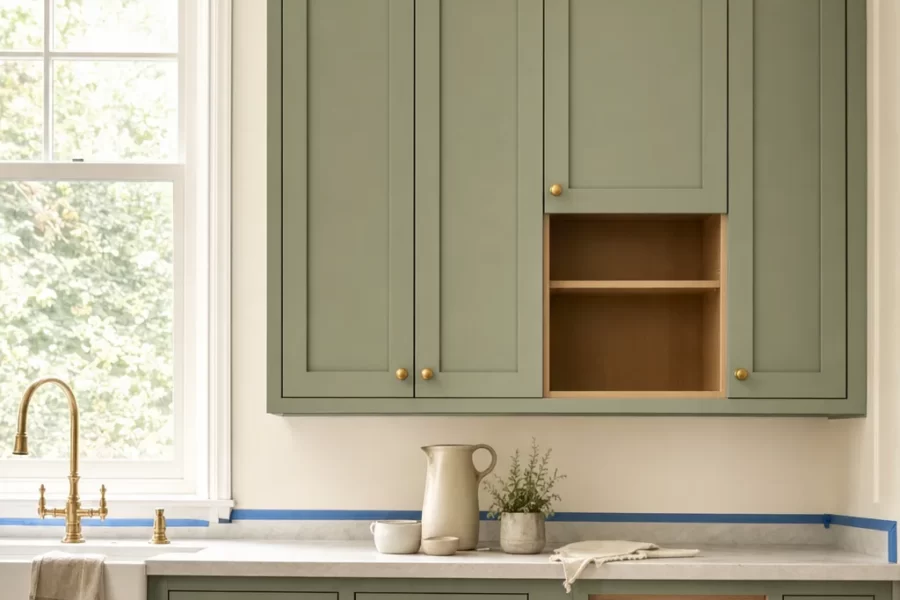
How to Paint Kitchen Cabinets Like a Pro
A step-by-step DIY guide to painting kitchen cabinets: degreasing, sanding, priming, and roller technique for a factory-smooth finish on a weekend budget.