Lay a Paver Walkway That Won’t Heave, Wander, or Grow Weeds
A paver path is a base project wearing a paver costume. The stones you see are the last 10% — the compacted gravel you'll never see again is the walkway.
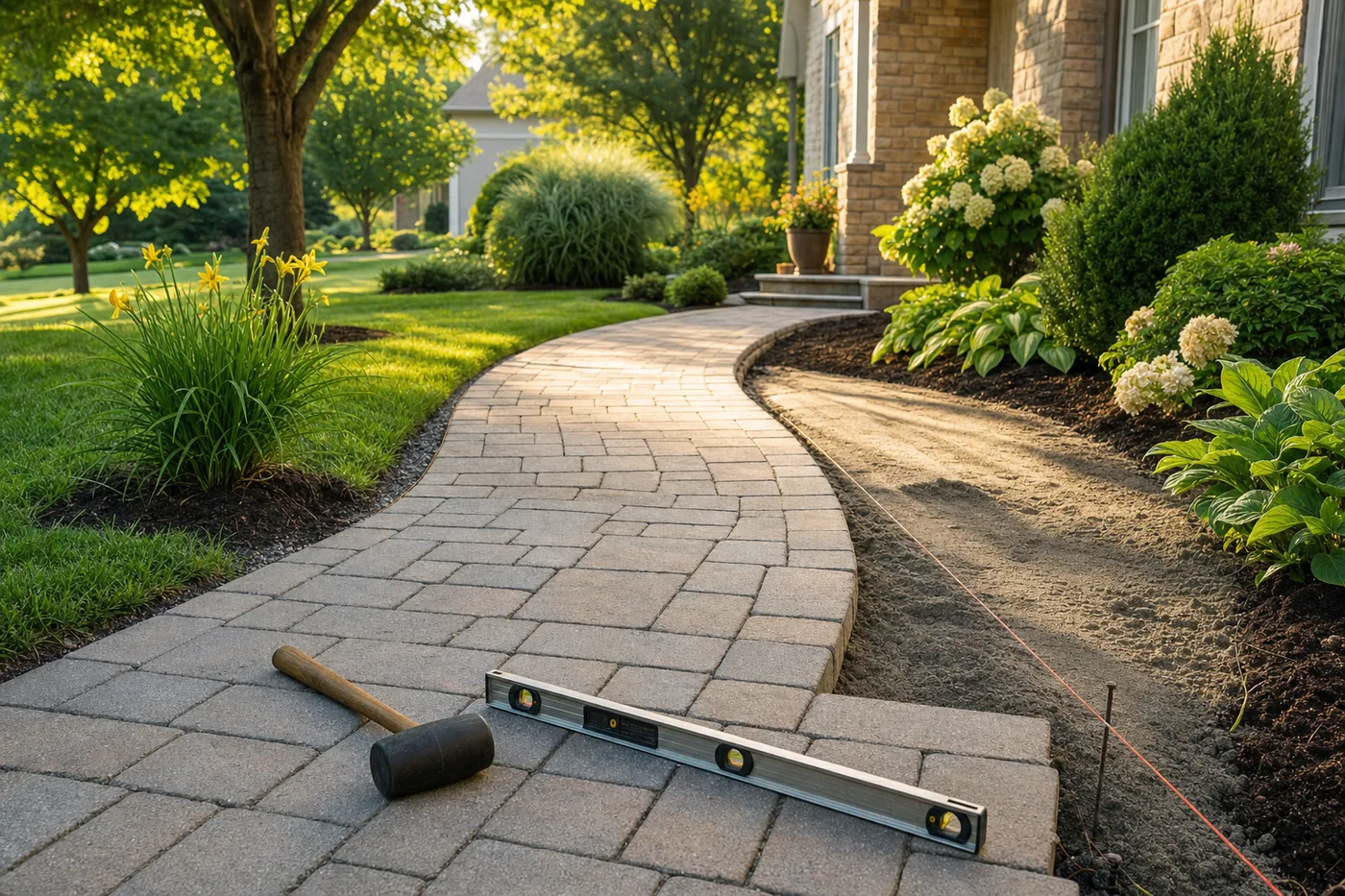
Every heaved, wavy, weed-choked paver path failed underground, not on the surface. Pavers are just armor; the structure is compacted crushed gravel sitting on undisturbed soil. Build that base honestly and the path shrugs off frost, strollers, and decades. Cheat it and the ground will publish your shortcuts by spring.
Layout and the call before you dig
Paint the path outline on the grass with marking paint — garden hoses make good curves to trace. Walkways want 36 to 48 inches of width; test yours with two people walking abreast. Then call 811 (or your local utility-locate service) and wait the two days. Gas and fiber lines run shallower than anyone expects, and the locate is free.
Excavate deeper than feels reasonable
Dig out topsoil to a depth of paver thickness plus one inch of sand plus 4 to 6 inches of gravel — typically 7 to 9 inches total — and 6 inches wider than the path on each side, because the base must extend past the pavers to support the edges. Dig to undisturbed soil; loose fill dug back in becomes the soft spot that sinks. Slope the excavation away from the house about a quarter inch per foot.
Build the base in compacted lifts
Spread 3/4-inch minus gravel in 2-inch layers, misting lightly and running the plate compactor over each lift in overlapping passes — two directions — before adding the next. Thin lifts compact solid; one thick lift only ever compacts on top. The finished base should feel like sidewalk underfoot and sit parallel to your final grade.
Screed exactly one inch of sand
Lay two 1-inch pipes on the base, flood between them with concrete sand, and drag a straight board across the pipes to leave a perfectly uniform inch. Lift the pipes, fill the grooves, and don’t step on it again. The sand is a setting bed, not structure — more sand is not more better; it’s future ruts.
Lay, cut, restrain, lock
Set pavers straight down — never slide them — snug to their neighbors, working from laid stones so the bed stays pristine. Tap each with a rubber mallet and check the plane with a level every few feet. Cuts happen at the edges with a diamond blade. Spike edge restraint tight against the field, sweep polymeric sand into the joints, run the plate compactor over a protective pad to seat everything, refill the joints, then mist per the bag to activate the binder.
Polymeric sand hardens with water — including the humidity in an unsealed bag and the dust it leaves on paver faces. Sweep and blow the surface completely clean before misting, or the haze bonds to the stone permanently. And never activate it if rain is coming within 24 hours.
The path is the gravel. The pavers are just the part you’re allowed to see.
The five-year difference
A properly based path needs a joint-sand top-up every few years and nothing else. Edges stay tight because the restraint holds; weeds stay out because polymeric joints give seeds nowhere to root; and frost heaves the lawn around the path instead of the path itself — the quiet signature of a base done right.
Keep the momentum going
All articles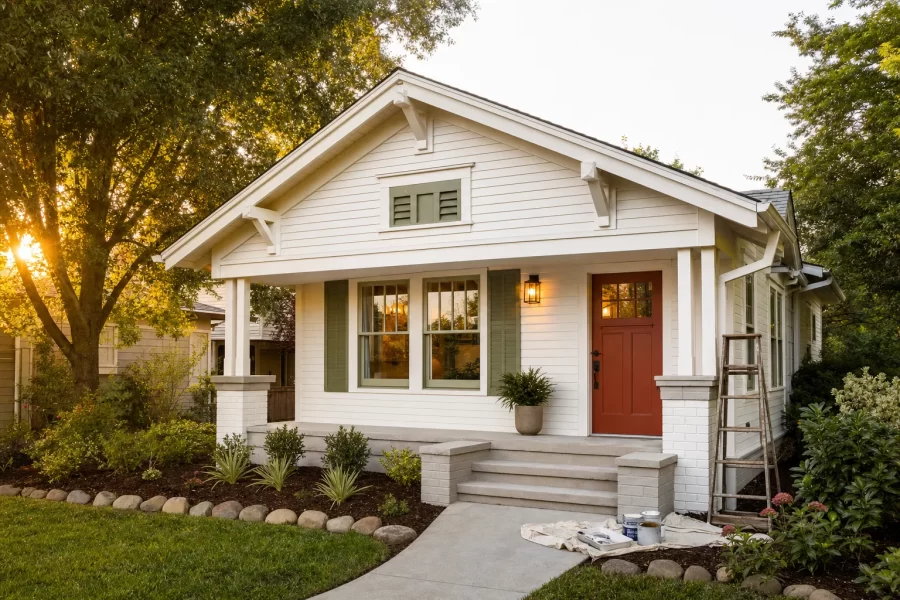
Weekend Curb Appeal: Seven Projects That Transform Your Front Yard
Seven high-impact DIY curb appeal projects ranked by payoff per hour: front door paint, house numbers, lighting, mulch edges, and more.
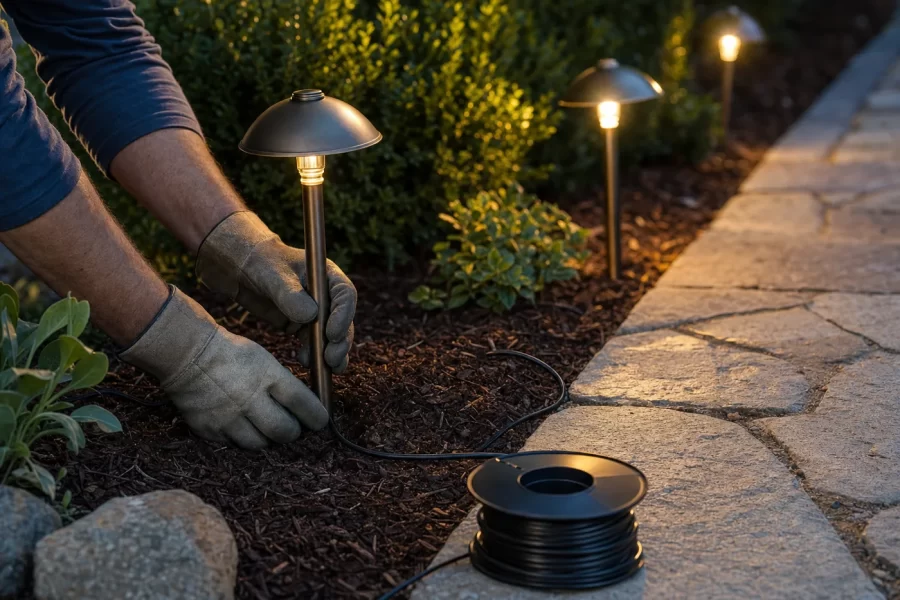
Install Low-Voltage Landscape Lighting That Looks Designed, Not Decorated
A step-by-step guide to low-voltage landscape lighting: sizing the transformer, planning wire runs, burying cable, and aiming fixtures after dark.
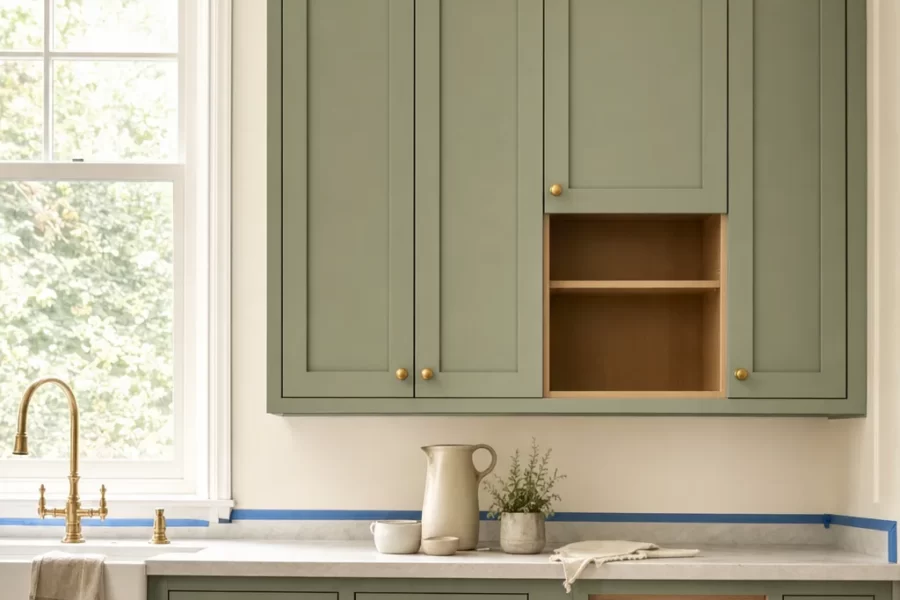
How to Paint Kitchen Cabinets Like a Pro
A step-by-step DIY guide to painting kitchen cabinets: degreasing, sanding, priming, and roller technique for a factory-smooth finish on a weekend budget.